The Calorie labelling Regulation is part of a wider government strategy to tackle obesity and promote healthy eating. This blog breaks down the legislation and what it means for you.
The trend for transparency is not a new fad, it’s been growing for a long time. For more than a decade now, legislation has been in force in America. Despite criticism from both eating disorder campaigners and the industry, consumers are driving the trend for transparency. 68% believing the legislation is a good move while 57% said calorie counts would impact their food orders.
What are the key calorie labelling rules you need to know?
Calorie information needs to be displayed at ‘the point of choice’
The government wants consumers to be able to see calorie information at the time of choosing their order.
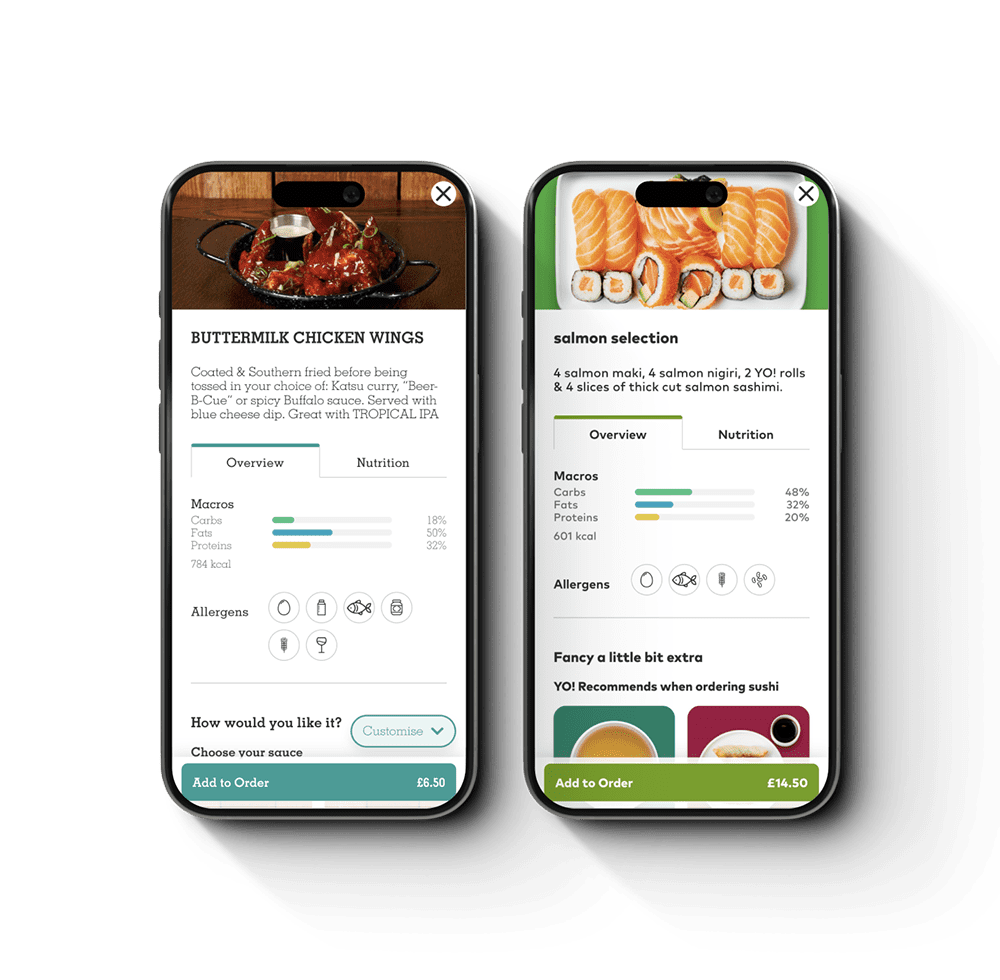
This means that calories must be clearly labelled on all of your physical menus, menu boards, online menus, third party delivery apps and next to the physical item if ordering from a display stand.
Calorie information must be displayed in kilocalories (kcal) and must be ‘easily visible, clearly legible, and not in any way hidden or obscured’. The legislation recommends using the same font, colour, size and background of the description or price of the food item.
For most products, displaying calorie information on a menu might be straightforward. But in the case of ‘meal deal’ options or ‘build your own’ meals, it’s a more complex challenge. Ensure you’re fully compliant with our calorie labelling features.
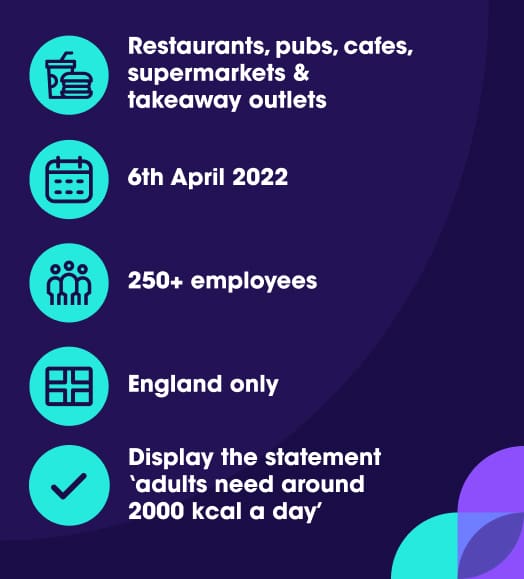
Menus must include the statement ‘adults need around 2000 kcal a day’
Along with the calorie information, operators must display this statement ‘prominently at the point where people are choosing what to buy’. That includes web pages or menu screens for digital menus, or on each side of a physical menu. The statement can never be changed.
In some cases menus need to specify the portion size of an item
Operators don’t need to call out that ‘single portions serve one’ as the description of the menu item typically makes it clear. For example, a chicken burger, 550 kcal.
But if an item serves more than one person, the menu needs to specify the number of people it is intended to serve. If an item is intended for multiple people i.e. a sharing platter or a whole cake, calorie information must be provided for the whole item as well as information on how many people it is intended to serve. For example, 15 chicken wings, 1000 kcal, serves four.
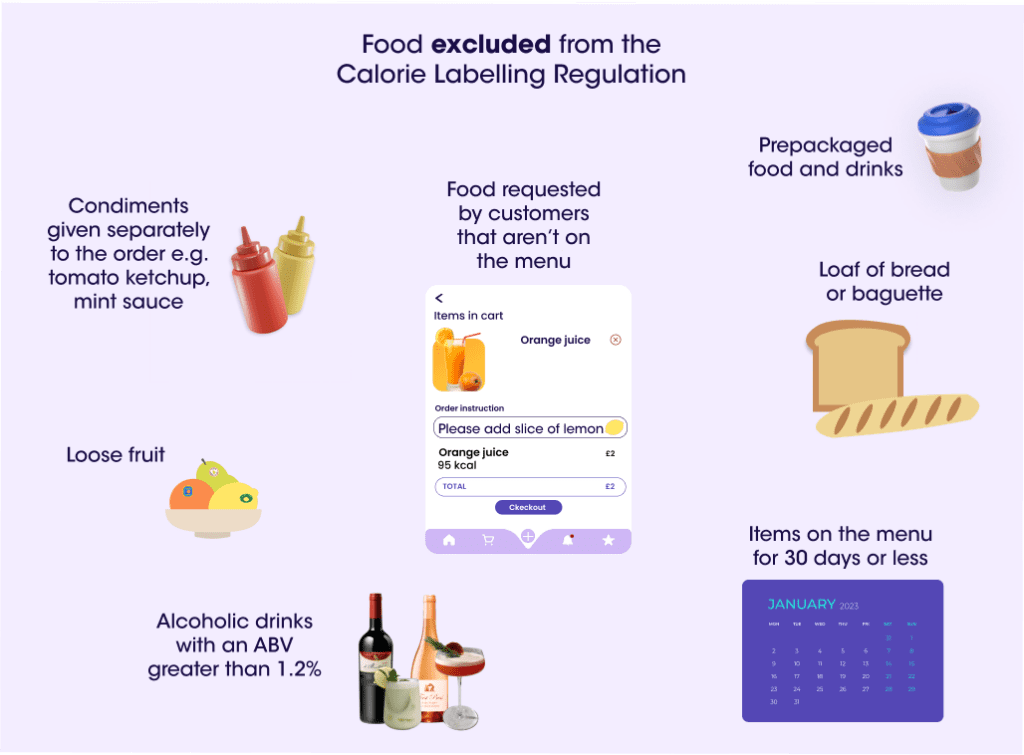
Do the regulations apply to every type of food and drink?
The new rules are focused on food and drink that is sold for ‘immediate consumption’. This means any non-prepacked food or soft drink item that is prepared for customers to consume immediately (either on-site or to takeaway).
Are there fines if my business doesn’t comply?
Enforcement Officers are set to make inspections where they will check how businesses calculate calorie content and if they are displaying them correctly. Any person who fails to comply with an improvement notice is guilty of an offence and may be fined £2,500 as an alternative to criminal prosecution.
Complying with the regulation
While the Calorie Labelling Regulation brings a fresh challenge, it’s a great opportunity to explore how digital can streamline your operations with easy menu management.
When it comes to displaying nutritional information, not all digital platforms are equal. There are key features that you should consider when looking for the best way to display calorie labels.