



I’ve had the same conversation many times. An operator describes their worst Friday lunch rush and, while the details change, the scene is always recognisable: bottlenecks throughout the operation, staff pulled in too many directions, customers at the counter with no idea where their order is or how long they’ll be waiting.
At some point someone makes the call to pull a kitchen team member forward to take orders and get money through the till, because it feels like the obvious move when the floor is busy. But the kitchen slows down, popular lines run out, and with nobody prepping or replenishing, the operation starts struggling to give customers what they came in for. What looks like the right call in the moment can make things harder, and what looks like a staffing challenge is often really a design challenge.
When does it cross the line?
You can usually feel it before you can measure it. The first signal is communication breakdown: staff go into heads-down survival mode and any semblance of process starts to give. The data catches up quickly, with throughput dropping, order completion times stretching, and average order value (AOV) falling as customers grab something quick or decide the wait isn’t worth it.
By the time the numbers reflect it, the floor has usually been telling the story for some time. The tipping point is when orders start stacking, collection points back up, and customers crowd the counter with no idea where their order is. At that point, the team is responding to the operation rather than running it, and the reactive decisions made in that moment, while they feel right, are usually addressing visible symptoms rather than the underlying cause.
Where the conflict actually sits
Multi-site QSR operators are managing more order channels at peak than ever: in-store, Click & Collect, delivery aggregators, Order & Pay at Table. The kitchen is where the pressure is most visible, but the real challenge usually starts upstream, in how orders are sequenced across channels before they even arrive.
When volume builds, the instinct is to add staff or redeploy between front of house and back. When that isn’t enough, some operators pause Click & Collect or suspend aggregator orders to cut volume. It’s an understandable response, but switching channels off damages the reputation of that channel and breaks customer habits that took real time to build: if someone orders by Click & Collect every Friday and suddenly finds it unavailable, they often won’t come back to it.
The operators who handle this well throttle rather than pause. Most platforms have a busy mode that limits order intake in a given window, managing customer expectations with an accurate wait time while keeping revenue coming in and giving the kitchen a staggered, manageable flow rather than a wall of orders landing simultaneously.
What breaks first
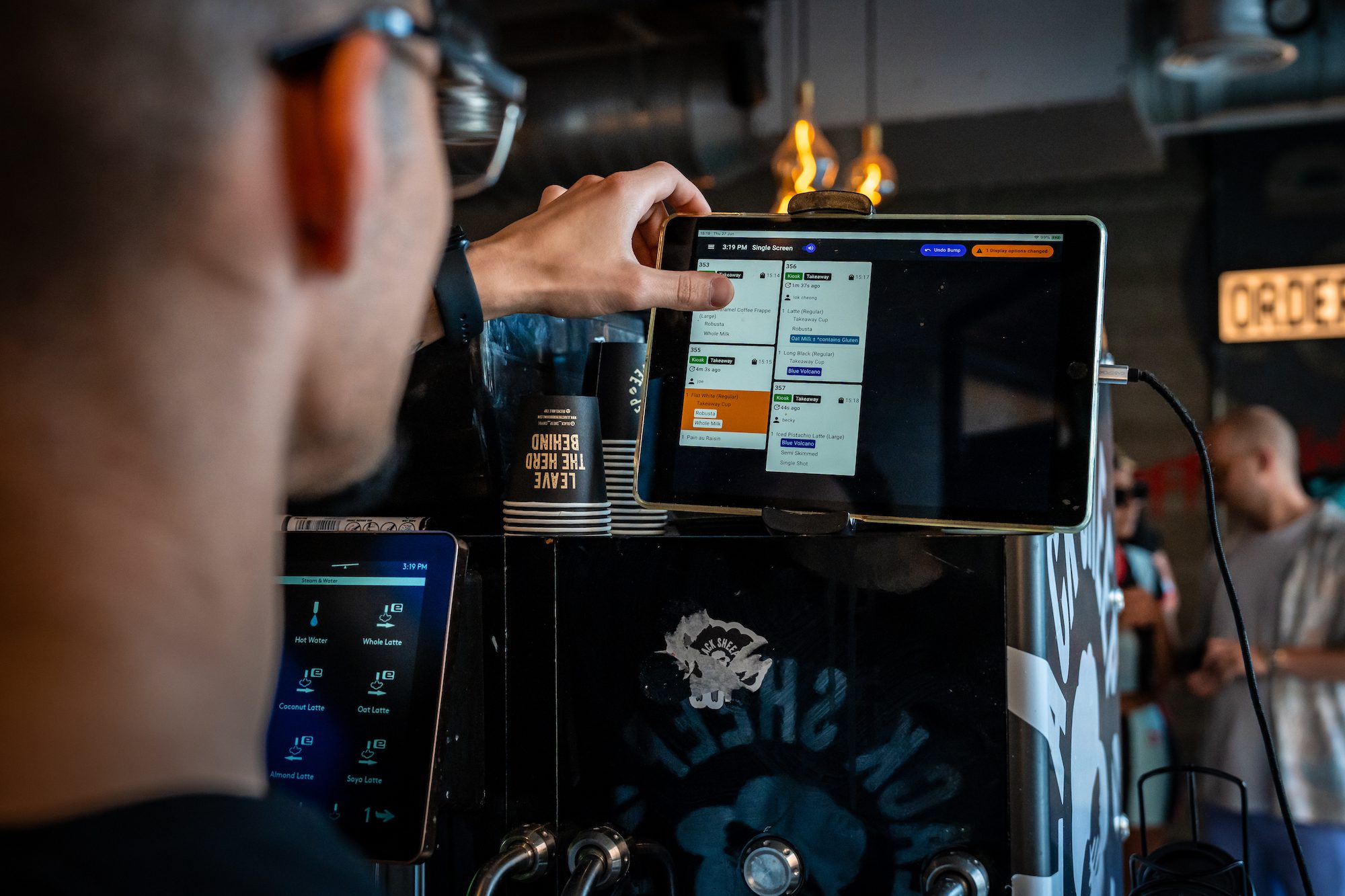
It almost always comes back to the tech stack. What you typically find is multiple channels running on multiple devices: a shelf of tablets in the kitchen, one per platform, each pinging separately. Orders get missed, staff find themselves managing screens instead of making food, and the cognitive load on the kitchen team rises at exactly the moment they need to be focused on output.
When you don’t consolidate your channels into a single Kitchen Management System (KMS), you’re asking the team to manage devices rather than orders. Bringing every channel into one KMS, with everything visible in time order on one screen, is the change that resolves a significant amount of that friction, and the pattern holds whether it’s a 10-site operation or a 40-site estate.
Three things operators who get it right do differently
The operators who perform best at peak tend to have three things working well together, and removing any one of them makes the others harder to sustain.
The first is a consolidated and actively configured tech stack. Everything flows into one unified order management system, one KMS, in sequence regardless of channel, with busy mode set up so the team can throttle order intake at peak with a single action. Menu Management is also doing real work here: the right product mix at the right daypart, with in-meal upsells protecting GP and growing AOV at the moment when footfall is highest.
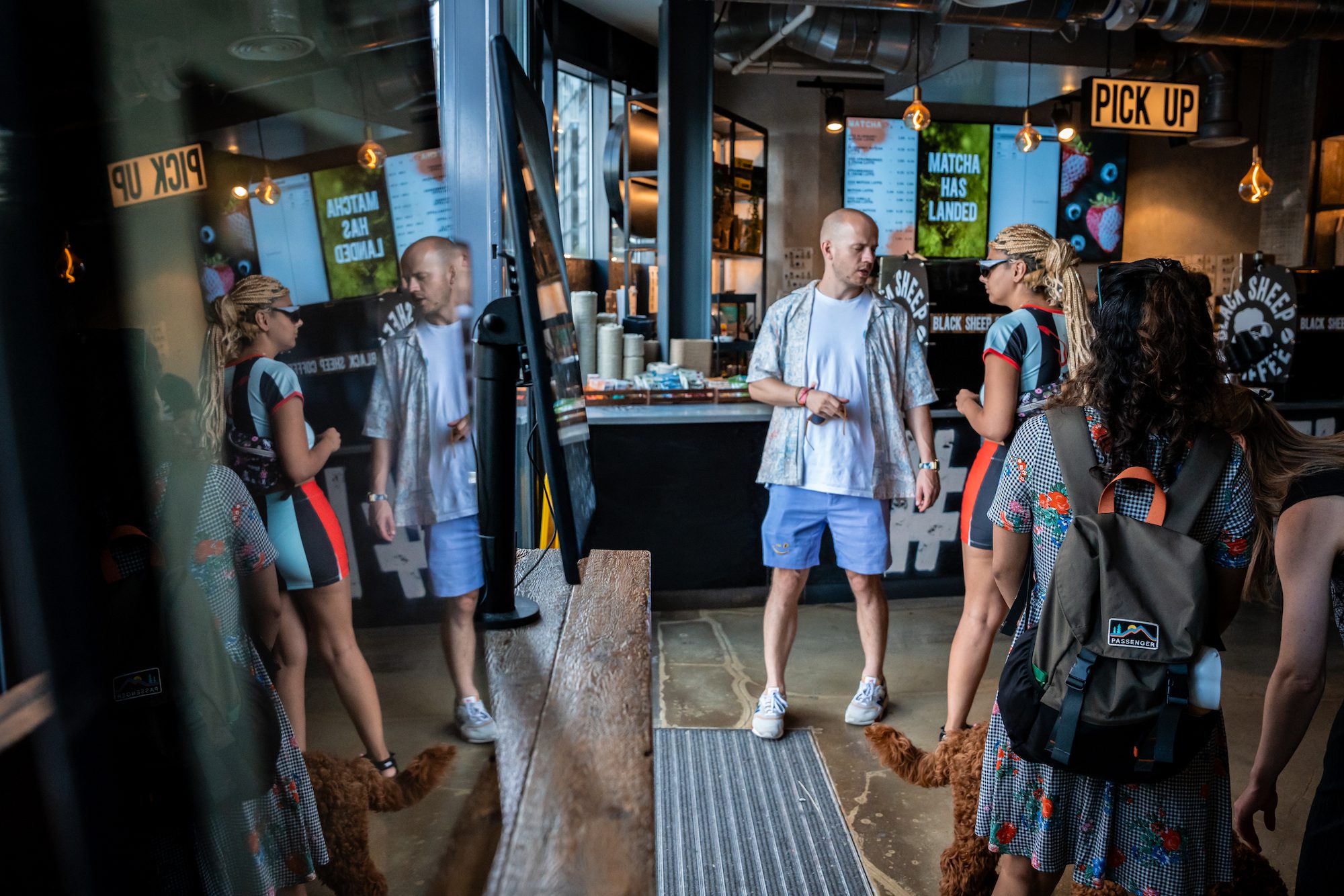
The second is a physical environment that does the communicating. Collection screens update automatically when the KMS marks an order complete. Click & Collect shelves are labelled clearly with order numbers. Aggregator drivers have assigned collection points away from customer queues. Every channel is signposted through the store, so customers can move to the right place without needing to interrupt a staff member. When the environment is set up this way, the team’s attention stays where it matters most: on quality and service.
The third is a team that’s genuinely set up to succeed. Strong standard operating procedures (SOPs) that hold pace under pressure, stations laid out to minimise unnecessary movement, and preparation discipline at peak that keeps the focus entirely on output. When staff know exactly what to do without having to think about it, quality holds even when volume is high.
Treating peak as a design challenge
My colleague Fabrizia Ferrara, who works closely with growing operators across our client base, made an observation that has stayed with me: growth and challenge can look identical from the outside. Both show up as a stretched, busy operation, but they have different root causes and different solutions.
The operators who’ve moved furthest on peak performance made a deliberate choice at some point to treat it as a design challenge rather than a resourcing one. A smaller, well-set-up team in a well-designed operation will consistently outperform a larger team adapting on the fly, and building the right foundation early is always easier than retrofitting an existing site.