
9 October 2026
Creative foodies, behaving like a tech team: inside The Salad Project’s innovation story
Clem Haxby of The Salad Project shares how a team with no tech background built a loyalty-led digital growth engine.
Much like the golden arches themselves, McDonald’s self-service kiosks have become a true hospitality icon.


McDonald’s kiosks are the first thing that most restaurant operators imagine when they envision self-service kiosks in their own operation.
But the giant brand first started testing kiosks way back in 2003. And it has invested over £250m in redesigning 200 locations to suit the rise of omnichannel ordering such as kiosks – that’s £250m just for the UK and Ireland.
Can you match that kind of timeframe and budget in your operation? (Don’t worry, neither can anyone else.)
The problem is that without the resources of McDonald’s, Operators often find kiosks difficult to integrate into their wider tech stack. This is thanks to inefficiencies created by fragmented tech.
Our industry research uncovered that 56% of operators feel that not having enough time is a significant barrier to business goals.
The good news? You actually don’t need a cheque signed by Ronald to make kiosks work for your operation.
It just requires a new way of doing things…
Kiosks aren’t likely to be the only order channel open to your customers within your operation.
For example, 50% of Mcdonald’s orders go through digital channels. But this isn’t just through McDonald’s kiosks. It also includes McDelivery and mobile, as well as third-party delivery.
If you don’t have the resources to develop digital ordering channels in house, it’s likely that each channel is installed and managed by a separate provider. Managing these multiple order channels can quickly become overwhelming. Especially without the resources of McDonald’s to dedicate the full-time management they require..
It’s easy to get into the mindset that the added complexity that comes with the launch of new technology is par for the course when it comes to adding kiosks.
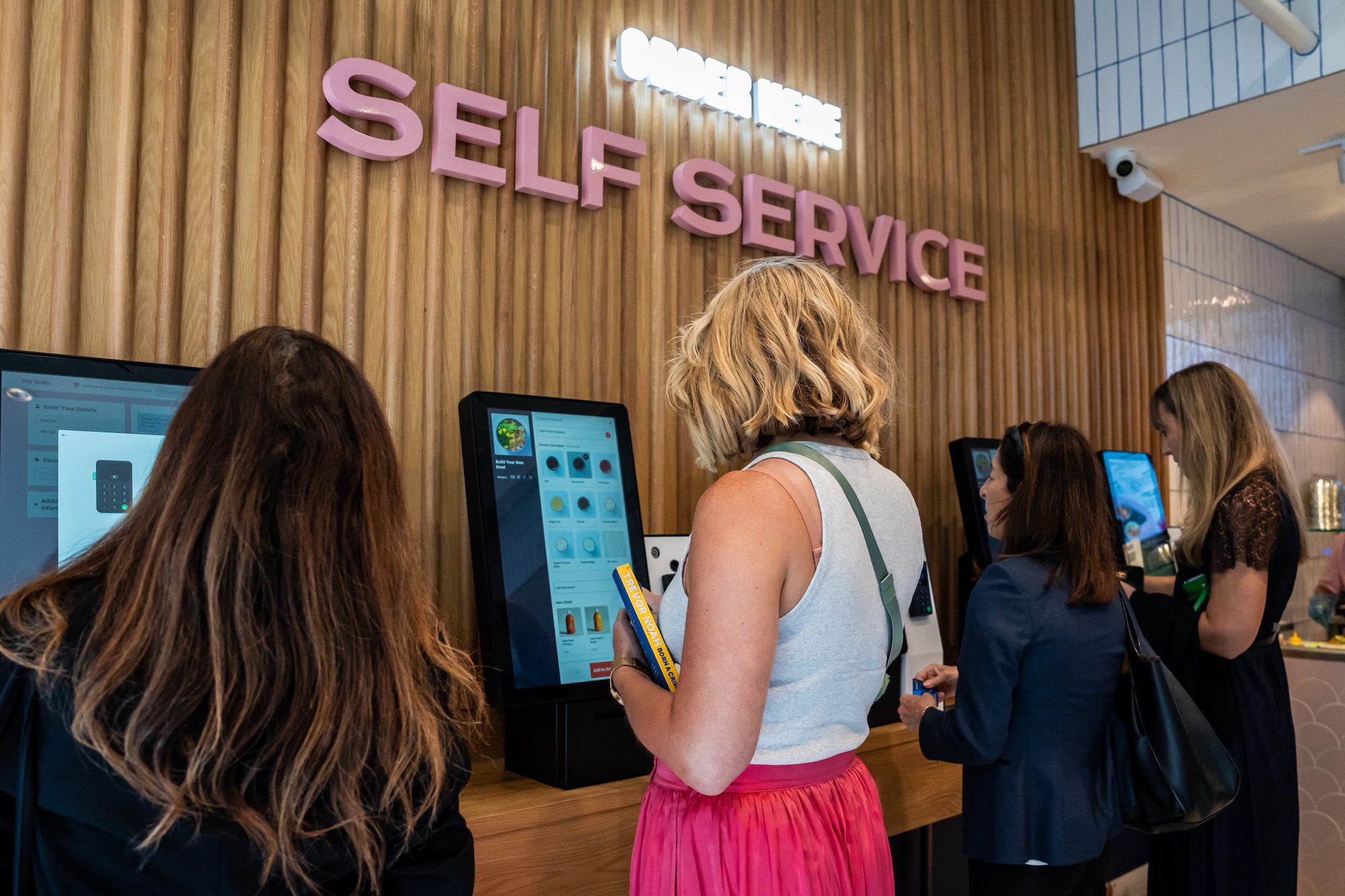
But digital innovation can come to your operation without creating headaches. Finding workarounds for, or accepting, these inefficiencies is actually a drain on your operation’s time.
This can block growth plans significantly.
Think kitchen chaos, where the team is trying to manage a separate device per order channel. Or dedicating a member of staff per shift solely to updating menus across all your channels.
Identifying what isn’t working in your setup, and not just accepting these inefficiencies as a part of tech, is an important step towards a successful kiosk strategy like McDonald’s.
A win-win for your customers and your business
Book a chat with a hospitality expert to learn how kiosks can increase ATV and boost throughput.
Growth and profit are the ultimate sign of success for each of your order channels. For example, there was a 6% increase in sales for restaurants that were fitted with McDonald’s kiosks after a year.
But your operation won’t be able to action this growth if it’s being blocked by the inefficiencies identified above.
In our research report ‘Hospitality tech: Bridging the efficiency and profitability gap’, we identified:


And yet only 28% of operators reported that improving efficiency is a top focus area for the business.
To unlock revenue, operators need to change the order of these priorities. It’s putting the cart before the horse to focus on growth before fixing inefficiencies.
Trying to manage these inefficiencies rather than fixing them will ultimately slow down your operation to a halt. You’ll lock out any chance of achieving those all important revenue growth targets.
Forward-thinking brands that have tackled the inefficiencies within their tech stack first have gone on to achieve exponential return in revenue with new order channels. We’ve seen kiosks contribute to increases in ATV as high as 35% in those operations that have taken this approach.
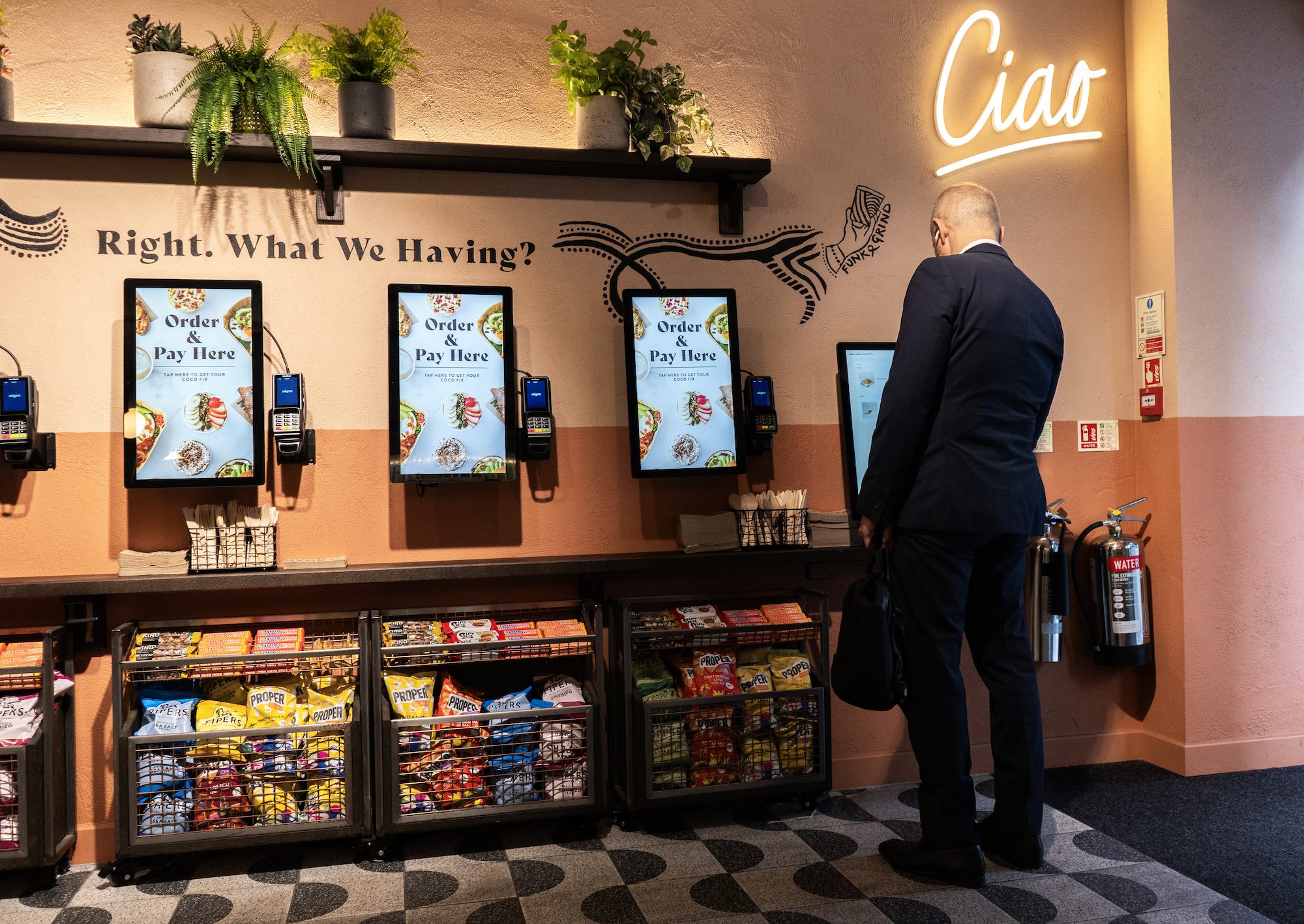
The good news is that there are alternatives to separate point solutions which can ease the complicated web of a fragmented tech stack.
An order management system, for example, streamlines the entire order journey in one system. This allows you to take and fulfil 100% of orders from all channels in the same platform, including those from third-party delivery and – of course – kiosks.
Managing all menus in one place, handling all orders through one KMS, and accessing all your sales data in one platform changes the game for your operation’s efficiency.
It empowers you to launch and manage multiple order channels, such as kiosks, with ease. This frees you to focus on boosting profit from these channels instead of getting bogged down in day-to-day operations.
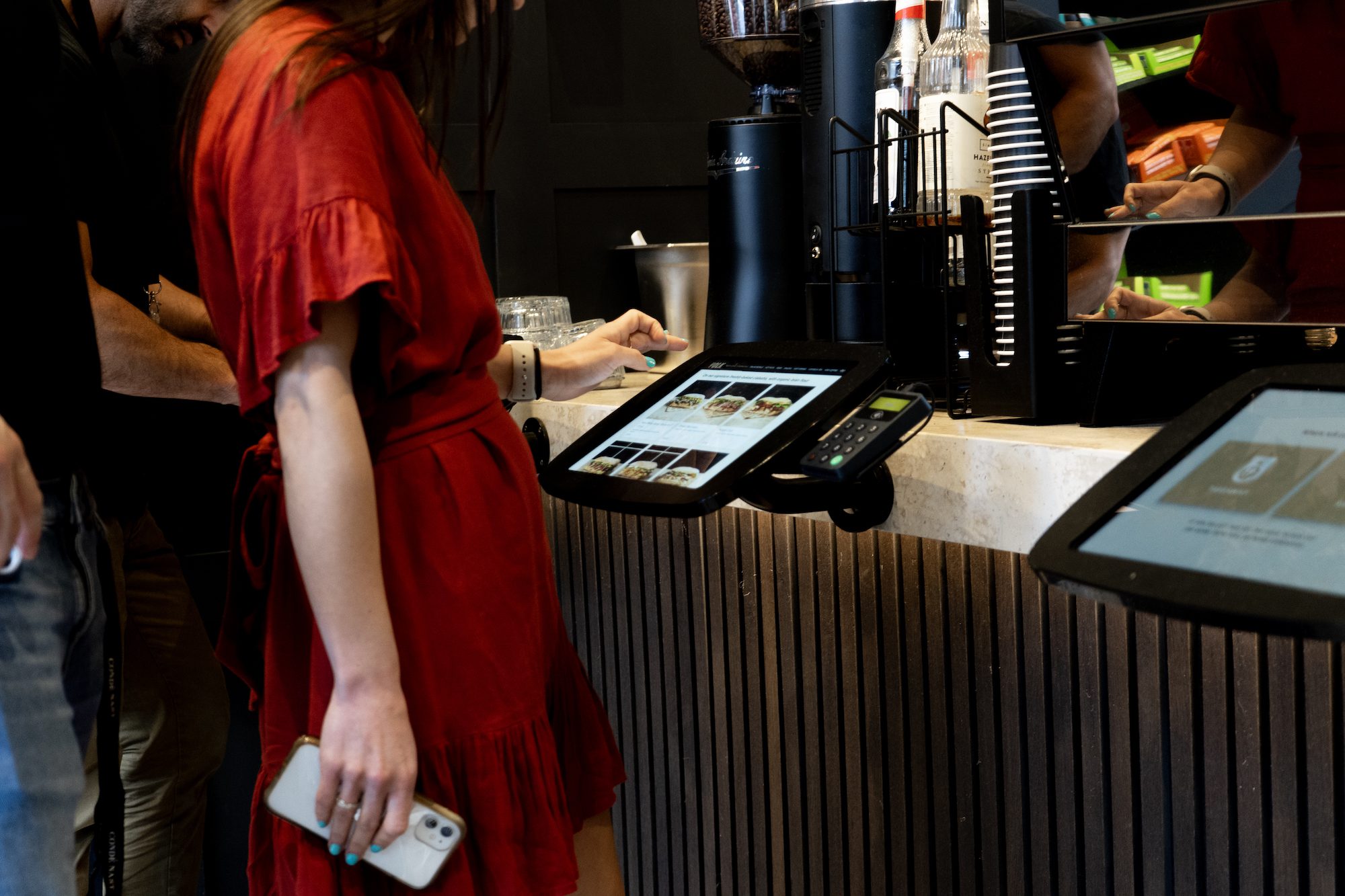
McDonald’s runs floor-standing Self-service Kiosks at the entrance of most of its UK restaurants. Customers browse the menu, customise items, and pay by card. Orders go to the kitchen via a screen-based system and to the till counter for collection.
McDonald’s has reported higher average ticket sizes from kiosk orders than from counter orders, attributing this to customers ordering more and adding modifiers when there’s no queue pressure behind them.
Not directly. McDonald’s runs high-volume metro sites with consistent menus and dedicated runner labour. A UK multi-site operator with six to 50 sites should match its kiosk strategy to its own peak throughput, menu complexity, and floor space, not to McDonald’s playbook.
McDonald’s runs a custom kiosk stack built in-house over many years. Vita Mojo’s Self-service Kiosks give multi-site UK operators the same core capability (channel-aware ordering, modifier visibility, real-time menu updates, integration with POS and the Kitchen Management System) without building it from scratch.
The kiosk itself is the customer-facing piece. Its value comes from its integration with POS, the Kitchen Management System (KMS), Menu Management, and analytics. Kiosks running in isolation create the order-routing and reporting headaches McDonald’s engineers spent years solving.
Now you can start to carry out kiosk tactics similar to the McDonald’s kiosk strategy that will boost sales, increase profit, and supercharge customer loyalty.
Here are some guides to get started:
Learn more about our digital ordering solution built to simplify operations and drive higher revenue.
Clem Haxby of The Salad Project shares how a team with no tech background built a loyalty-led digital growth engine.
Chris George, VP of Product, walks through six months of delivered features and gives a first look at the second half of 2026.

How does a fast-growing QSR brand scale through franchising without losing control? Five lessons from YouMeSushi’s Tim Circus, Head of Franchise.
Want to see more from Vita Mojo?