
15 July 2026
Vita Mojo’s 2026 product roadmap: What we’ve built, what’s next
Chris George, VP of Product, walks through six months of delivered features and gives a first look at the second half of 2026.

Discover why an agile workforce is the solution to combat rising hospitality labour costs.
Spread the word:


When the Minimum Wage and Living Wage increased in April, it put enormous pressure on the hospitality industry, which was already straining under the weight of wildly rising costs.
Businesses are being squeezed from almost every conceivable angle: from cost of goods through to business rates, energy costs through to rent. Under these conditions, for many operations keeping a business profitable can simply seem unmanageable.
In contrast to the post-2020 labour crisis, when businesses struggled to fill vacancies, operators might now be tempted to reduce their staff as much as possible. When this comes at the cost of customer experience, however, operators are putting their long-term growth at risk.
Read on to learn how to work with a reduced labour force, whilst still delivering the perfect experience your customers expect.
“We close the door one day, and with nothing else changing, we have £800 million of extra cost going through the sector to absorb the next day,” said Kate Nicholls – CEO of UKHospitality – during her speech at the HRC conference 2024.
To absorb that cost, many businesses have reduced labour as much as possible, and they’re looking for further ways to keep costs down while trying to increase revenue. Focusing on reducing labour as a solution skips over the actual fix though.
The real solution lies in an operation’s ability to be agile. It’s about empowering the team you have to deliver increased revenue, confidently.
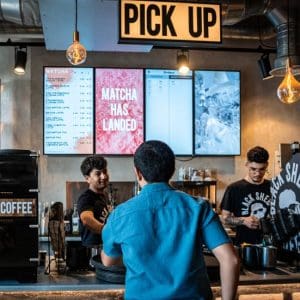
Many QSR and Fast Casual operators are already using tech as a first port of call for cutting labour costs down. Digital order channels like self-order kiosks and Click & Collect are tools that enable you to work with a smaller team – but that’s not the only benefit they can bring to a labour model. Tech can unlock a new level of flexibility for a team, one that will free them from manual, time-consuming tasks and instead allow them to focus on delivering more valuable services.
As Mariam French, Marketing Director at LEON, discovered when the brand embarked on its digital journey:
“At the time when we were in a real labour shortage, digital ordering enabled us to have that throughput and still be able to take all our guests’ orders, and just redeploy and shift teams. So that was actually one of the reasons we could stay really agile and alive – effectively – and keep taking orders. So it was really important from a functional perspective, and we had to take our teams along that journey as well. To say “This isn’t about robots taking your jobs, actually it’s to make your life easier, so you can focus on having that interaction and making sure food’s perfect every time.”
Chat to one of our experts for advice on how you can equip a reduced team to deliver the perfect experience, every time.
Take your teams on the ground for example. How much time are they spending on manual admin tasks that they could be spending more valuably? They might be chained to the POS, manually taking orders and payments. Or they might be wasting time sorting third-party delivery orders coming through multiple tablets, whilst the kitchen staff are in disarray managing multiple screens and order flows.
And whilst your team is focusing on managing these inefficiencies, your customer experience is suffering.
The fewer team members you have on a shift, the worse these inefficiencies become.
But if you use tech to take over this manual admin work, those same workers can focus on value-added tasks instead. Tech can work in the background, acting like an extra member of the team.
“By making self-order kiosks our main in-store ordering method,” said Bridie Fox, Operations Director at I am Doner, “it’s freed up labour to the extent that it’s like having one additional employee.”
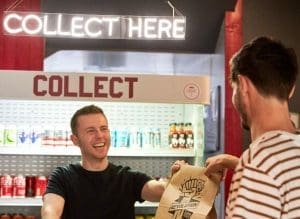
This allows teams to work in a much more agile way, replacing the need to dedicate workers to a specific, manual job throughout a shift. Instead, they can move throughout the operation dynamically, helping fulfil orders in the kitchen at peak then moving to more customer-facing roles as and when needed. And with the help of a single, centralised Kitchen Management System, your kitchen can stop wasting time managing multiple tablets and work efficiently, more accurately, and quicker – even with a leaner team.
These are just a couple of examples reflecting the way tech can unlock agility for a reduced labour model. How this flexibility is employed will depend on the needs of the operation in question – but it should be focused around adding value to your customer journey. Let tech do what tech does best, and free up humans to do what they do best.

The ability of your team to focus on delivering human-led hospitality will ladder up to improving customer experience, encouraging brand loyalty, and in the long term will increase revenue.
Ultimately, hospitality is an unpredictable industry; the increase in labour isn’t going to be the last obstacle that operators come up against. Businesses must be agile enough to thrive, whatever the world throws at them. Giving your team the tools that allow them to work in as flexible and agile a way as possible will ensure you can deliver the best working environment and customer experience, whilst driving business growth, no matter what’s around the corner.
Talk to one of our experts about your operation’s labour challenges, and discover how you can keep delivering winning experiences with a smaller team.
Chris George, VP of Product, walks through six months of delivered features and gives a first look at the second half of 2026.
How does a fast-growing QSR brand scale through franchising without losing control? Five lessons from YouMeSushi’s Tim Circus, Head of Franchise.
Keyana Mohammadi, Head of Marketing for Dave’s Hot Chicken UK and Ireland, shared the strategy behind one of the most talked-about quick-service restaurant (QSR) launches in recent UK history.
Want to see more from Vita Mojo?