
15 July 2026
Vita Mojo’s 2026 product roadmap: What we’ve built, what’s next
Chris George, VP of Product, walks through six months of delivered features and gives a first look at the second half of 2026.

Our guide to auditing your existing restaurant tech stack, so you can find opportunities for improving efficiency and driving revenue growth.


With so many parts of the business impacted by the right or wrong tech, it can be difficult to decide whether to invest in new tech.
With the pressure to deliver increased revenue and footfall and the demands of ambitious expansion plans, you can’t afford to waste time and money on inefficient tech. Yet 56% of restaurant operators have frustrations with their POS provider, a number that rises to a staggering 87% for the largest business size.
It’s not impossible to have a restaurant tech stack that actually delivers the efficiency, revenue and success it was meant to. Forward-thinking brands like McDonald’s, LEON and GAIL’s are all powering tech-led growth despite consistently tough trading conditions.
It’s a matter of choosing the right tech setup for your unique business requirements, with the right partner that’s invested in your success.
But before you can even consider a new investment, you have to determine whether your existing technology is serving its purpose and allowing you to grow your business.
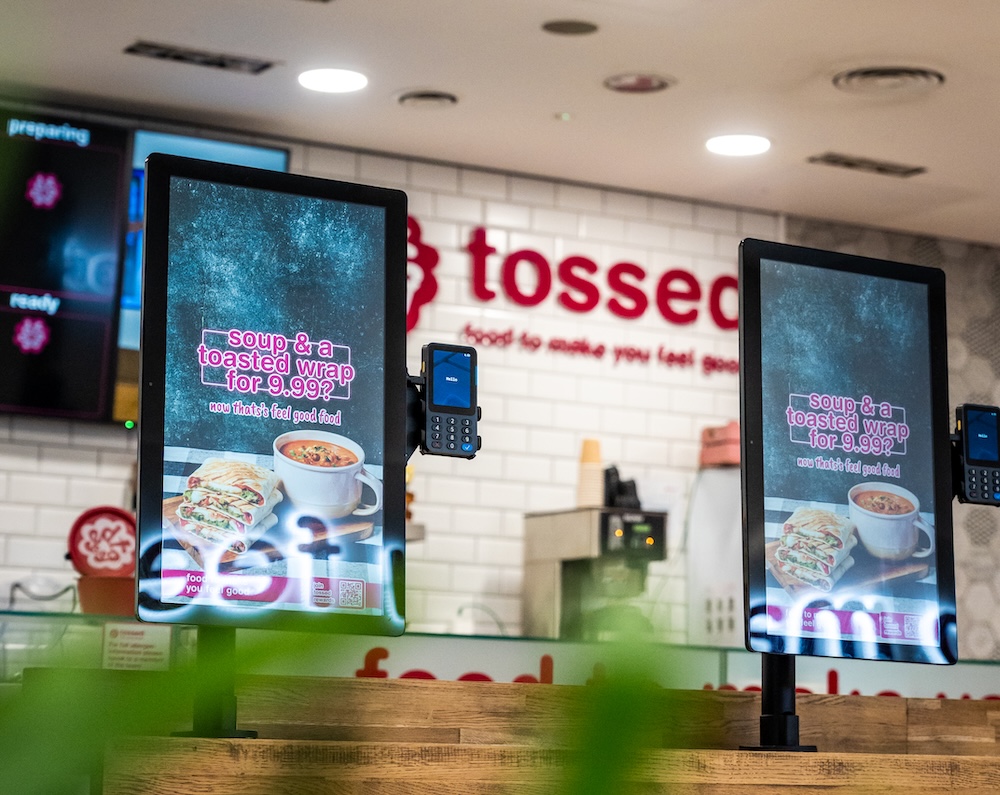
Before you can make meaningful decisions around any changes to your tech stack, you need to fully understand your current setup.
With the huge amount of tech suppliers and combinations out there, this can be a more complicated task than it first appears.
We recommend spending time analysing your current tech stack from top to bottom and literally drawing it out element by element. This will give you a more thorough and realistic view of the tech you’re using and how it might be affecting the efficiency of your operation.
STEP 1
Start by drawing out exactly how many providers you work with, circling around your POS in the middle. Once you’ve determined how many providers contribute to your tech stack, the next step is to work out exactly what they deliver.

STEP 2
Break the providers down into the separate services they deliver and label each one.
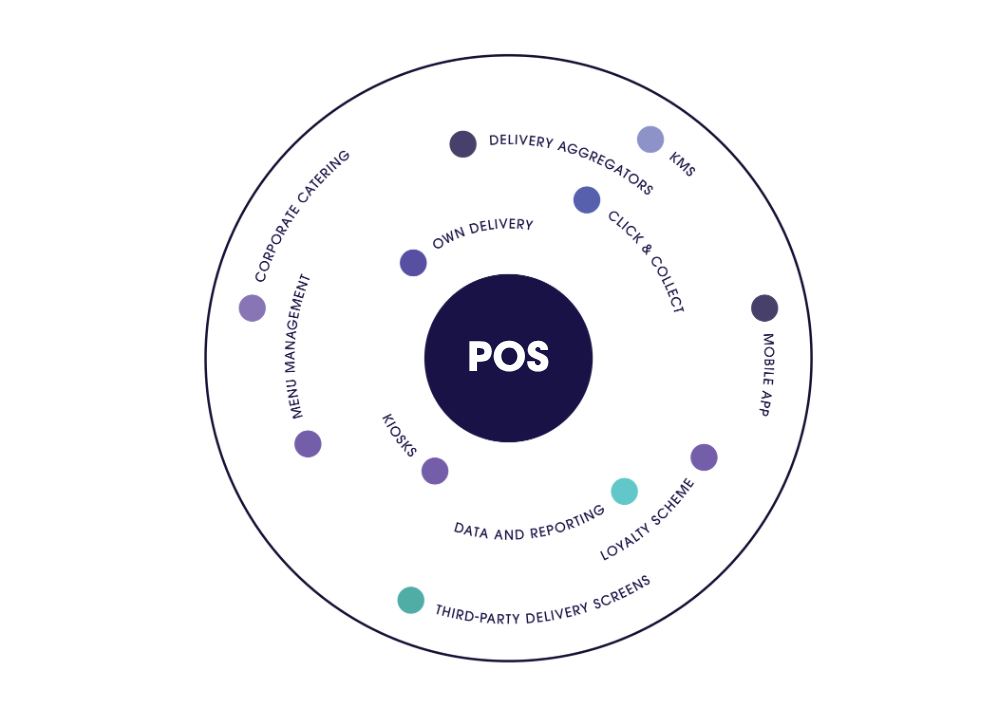
You might find yourself adding more dots to your drawing as you break the providers’ services down. One provider might deliver all your digital ordering channels, but these should be broken down into each separate channel e.g. “Kiosks” and “Click & Collect”.
STEP 3
Draw lines connecting each element to reflect any integrations that need to happen to make them work. For example, does your loyalty scheme need separate integrations to each of your order channels (app, website, offline paper-based)? How does your KMS integrate with your channels?
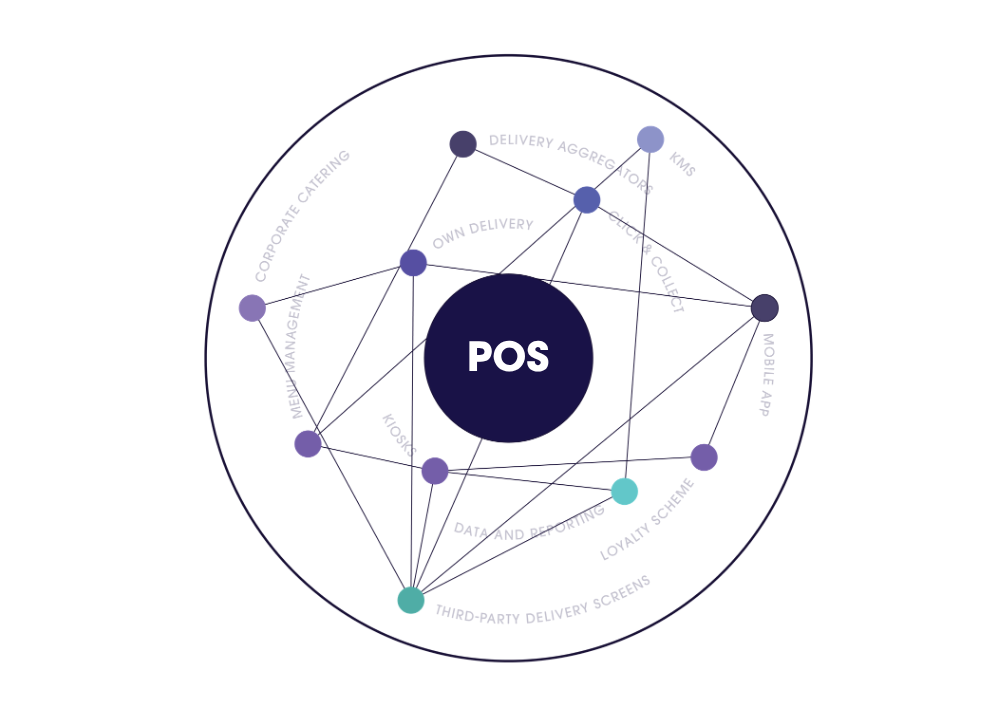
Then you can identify inefficiencies within this setup. Where are integrations costing your team excessive time? What points in your operation are being overcomplicated by multiple providers?
For example:
FINAL STEP: Understand your business goals
Consider how tech aligns with your business goals and targets. Identify within your current tech stack exactly what is stopping you from achieving these, and map any new tech against how it will drive your business to succeed.
The first and arguably most important consideration when deciding on new tech is to ask: how will the tech improve efficiency across my entire operation? All vendors will claim to improve efficiency, so your job as the buyer is to investigate and validate that claim.
Think about the support you receive across your tech stack too, and how this will impact your ability to meet your business goals. Which of your providers understand your business targets, and are actively working to meet them? How many tech vendors provide support for a single aspect of your business? If you experienced downtime, how quickly were these issues resolved and what was the financial impact?

Vita Mojo helps multi-site operators achieve control, consistency, and speed without adding manual work or extra systems as they grow.
See how Vita Mojo helps QSR brands scale with confidence.
There are nine fundamental questions to ask yourself while exploring your existing tech stack.
Armed with the discovery you’ve already made, these questions should help you conceptualise how your tech solves challenges and unlocks growth, while also identifying (and avoiding) the tech that will add complications further.
1. Does your tech increase efficiency and decrease complexity?
2. Does your tech help increase revenue and growth across channels?
3. Does your tech make your operation more robust and reliable?
4. Does your tech empower data-driven business decisions?
5. Does your tech take the pressure off your labour model?
6. Does your tech scale and develop with your business?
7. Does your tech help you deliver an omnichannel guest experience?
8. Is your tech delivered by a partner that understands and supports your business?
9. What is the ongoing cost and long-term value?
By taking a holistic view of restaurant tech, and focusing on efficiency as the driving force behind choosing it, it’s possible to unblock the path to profit and deliver exponential growth. For an example, look no further than your local McDonald’s.
Much like the golden arches themselves, McDonald’s self-service kiosks have become a true hospitality icon.
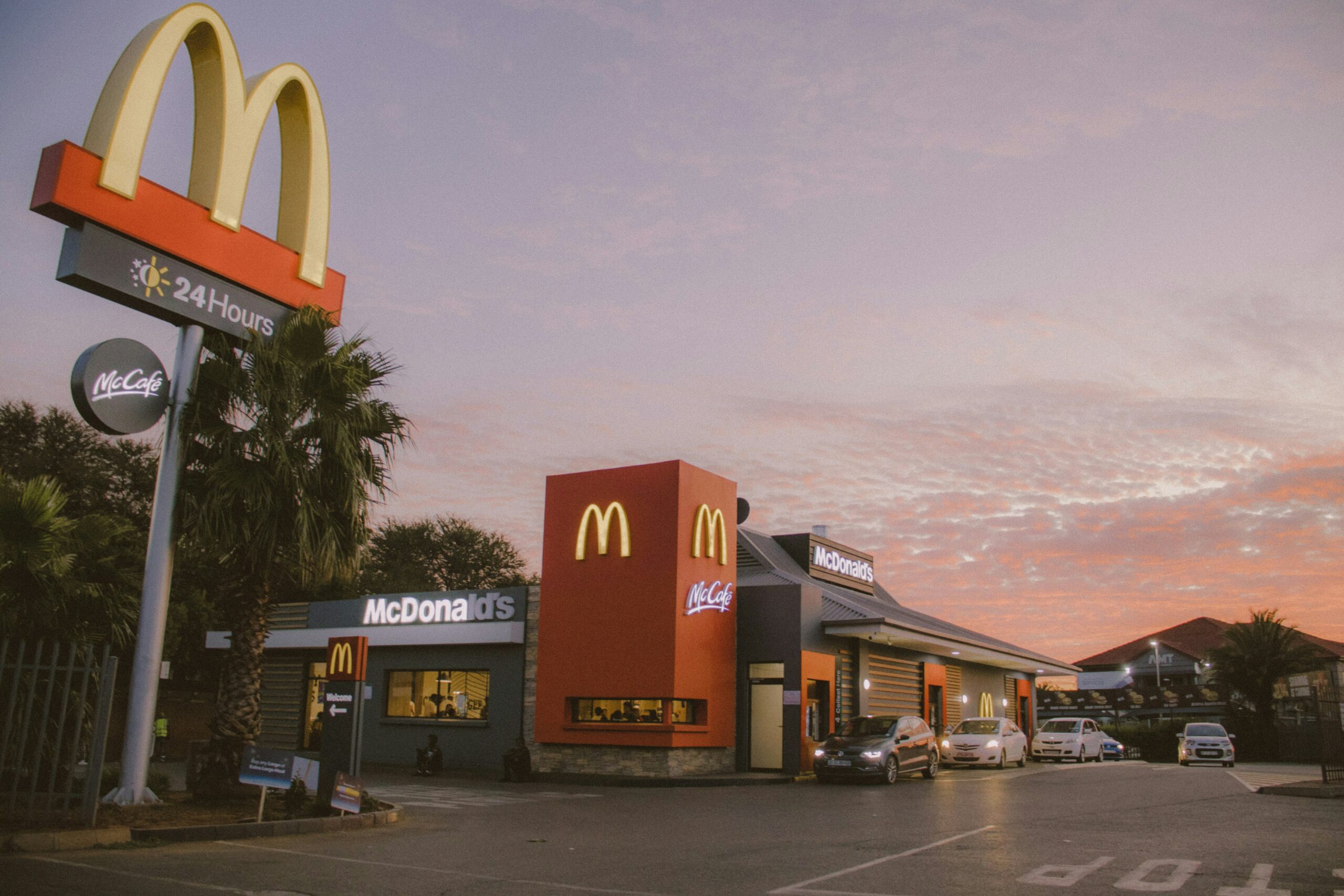
But whilst McDonald’s built most of its tech in-house, most operations can’t come close to matching the resources needed to do so at scale. In fact, McDonald’s invested over £250m in redesigning 200 locations to suit the rise of omnichannel ordering, that’s £250m just for the UK and Ireland.
So how can operations with less resources enjoy the same success with introducing new tech into their operation? The most important takeaway is that tech doesn’t end at the order screen. The fast-food giant didn’t just dive straight in and introduce kiosks, it took a bigger-picture view of the entire operation and revolutionised it at every level, together.
McDonald’s uses this ecosystem to not only take more orders across extra channels, but set the kitchens up to actually deliver these at the expected quality. It’s enabled the brand to maintain its position as the best-performing QSR in terms of revenue growth and resilience.
As well as kiosks, the McDonald’s tech ecosystem is renowned for:
McDonald’s success might seem like a result of its massive resources, but it is still possible to achieve this kind of tech empowerment by working with the right partner, and by taking an approach to tech with a 360-degree view of your business.
It’s not just about installing kiosks; it’s about managing the entire ordering process from start to finish across every channel.
For more in-depth advice on auditing your tech stack, Honest Burgers’ Head of Systems, Tommy Giraux, gives a thorough overview of his auditing process and recommendations on how to pick between vendors, the timeline, implementing the tech successfully, deploying training and what to measure to track success after roll-out.
Vita Mojo and our trusted partners deliver a complete operating setup that runs as one experience. No stitching systems together. No juggling suppliers.
Chris George, VP of Product, walks through six months of delivered features and gives a first look at the second half of 2026.
How does a fast-growing QSR brand scale through franchising without losing control? Five lessons from YouMeSushi’s Tim Circus, Head of Franchise.
Keyana Mohammadi, Head of Marketing for Dave’s Hot Chicken UK and Ireland, shared the strategy behind one of the most talked-about quick-service restaurant (QSR) launches in recent UK history.

Want to see more from Vita Mojo?