
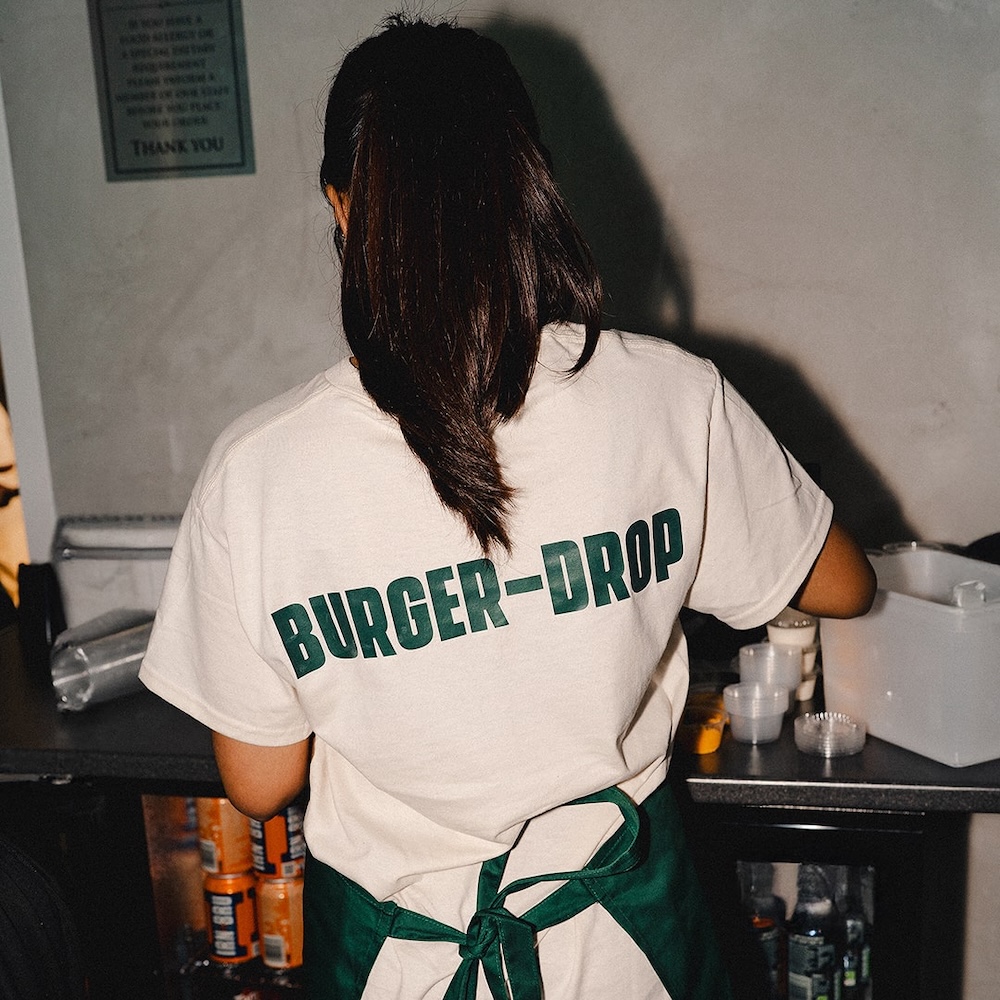
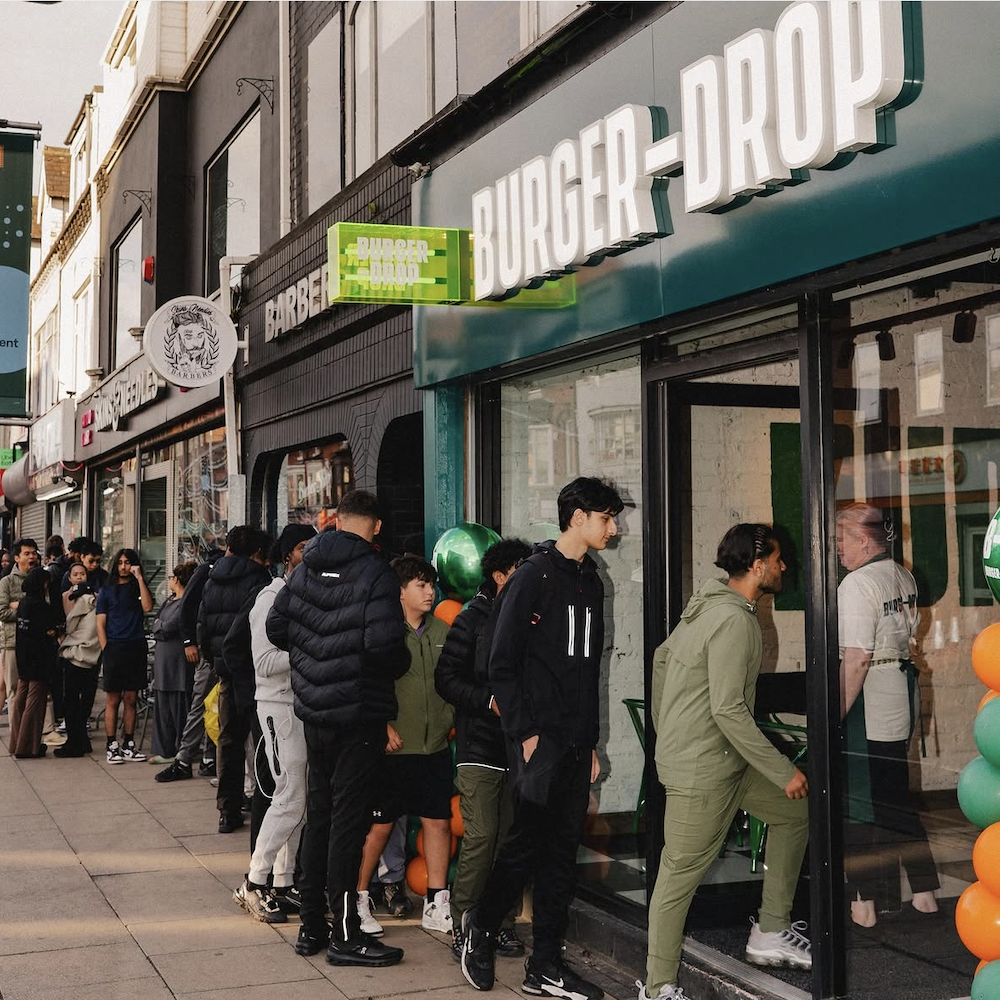
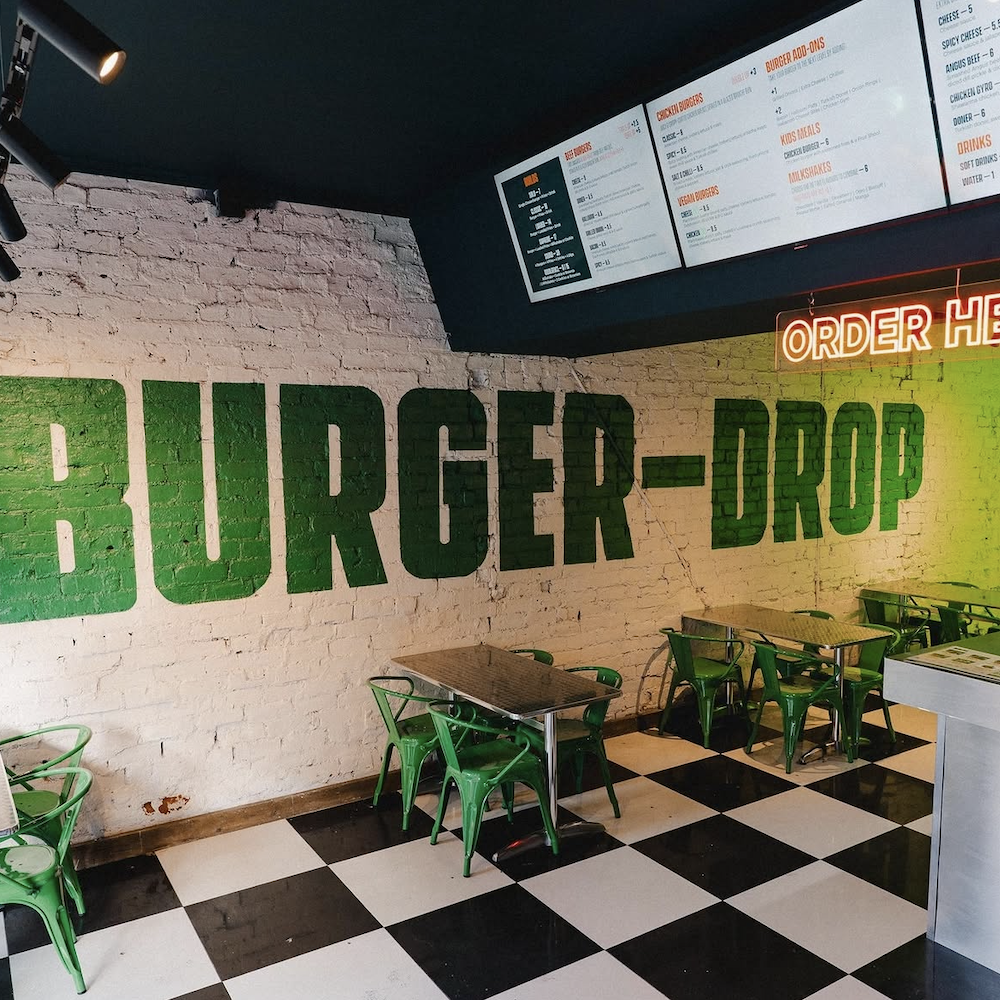
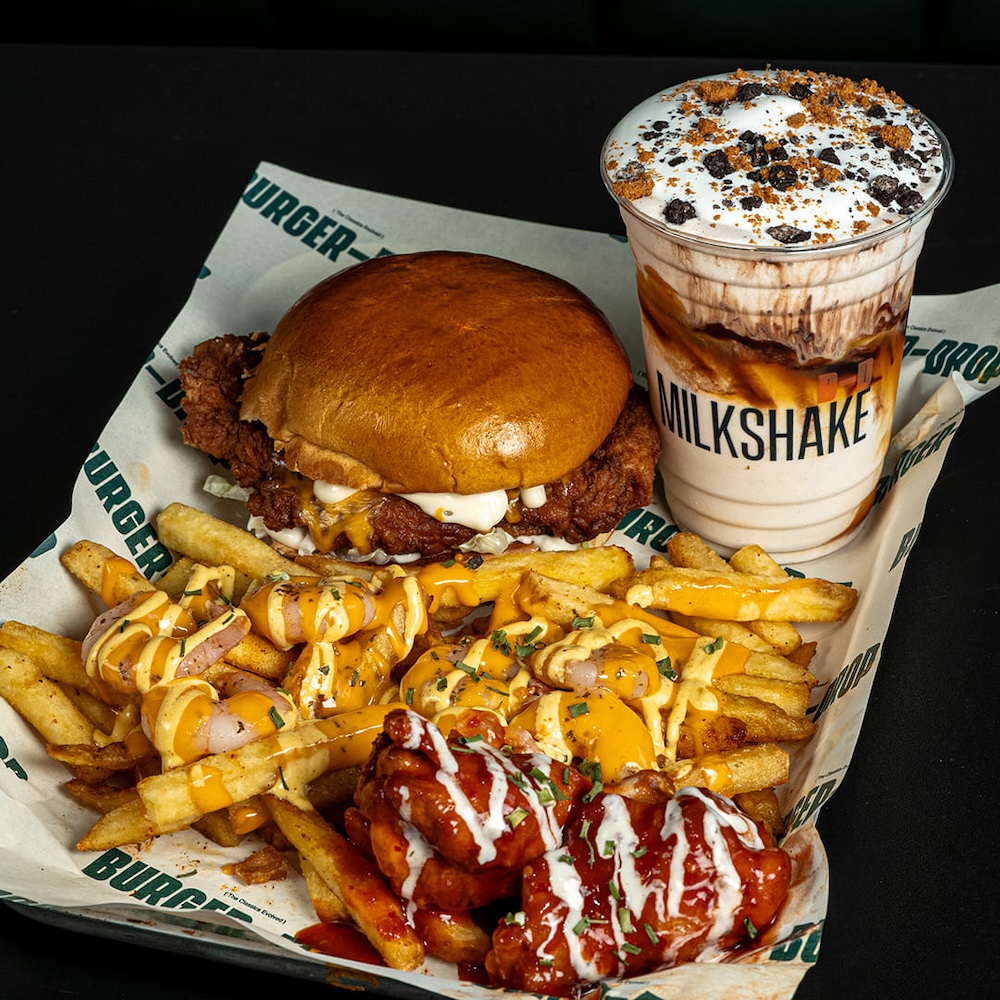

In a sector already crowded with smash burger concepts, Burger Drop has carved out a distinct identity through a deliberate approach to menu innovation: A monthly limited-edition burger programme that keeps the core offer tight while giving customers a recurring reason to return.
The model draws comparison with what Honest Burgers has done with specials in casual dining, but Burger Drop executes it at QSR speed and price point. A new burger every month, with distinct flavours and clear promotional activation, creates a rhythm of discovery that drives both first visits and repeat frequency.
The numbers that back the model
Burger Drop now operates seven sites, having grown through a British Franchise Association (BFA)-accredited franchisee model, allowing it to expand across the UK while maintaining brand standards. Net sales in the last 12 months are up 41.8% on the previous year. Total orders grew by a year-on-year increase of 49.7%.
Uber Eats is the strongest-performing channel, accounting for 59.8% of net sales in the last 12 months. The brand’s ability to activate limited-edition promotions and drive customers to specific menu items through the Vita Mojo platform has been central to delivery aggregator performance.
The operation behind every drop
The monthly limited-edition burger is not just a product decision. It is a marketing and operational discipline. Each new release requires menu updates across all channels, promotional content activation across ordering platforms, and front-of-house communication to drive take-up.
Vita Mojo’s Menu Management tools are what make this scalable across seven sites and a franchisee model. Menu changes are made centrally and cascade to all locations simultaneously. Promotional banners can be linked directly to the new item, removing friction between awareness and purchase. For a franchise operation, where consistency of execution across independently-run sites is the central challenge, this kind of centralised control is not a convenience: it is a commercial necessity.
The platform also enables reactive activation. If a limited-edition item is performing strongly, Burger Drop can extend it, amplify promotion, or build on the flavour profile for a future release. If a campaign is underperforming, the team can respond in real time rather than waiting for a monthly reporting cycle.
Burger Drop’s growth into seven sites via franchising is a more complex operational achievement than organic expansion. Each franchisee is running a business, not just a location, and the brand has to deliver the systems, training, and support that make consistent menu execution possible across an estate it does not directly control.
Why infrastructure is the real competitive edge
Menu innovation at scale, across a franchisee model, is one of the hardest things to do consistently in QSR. Burger Drop has built a programme, the monthly limited-edition drop, that creates commercial momentum, drives customer return frequency, and gives franchisees a marketing asset they can activate confidently.
The performance data backs the strategy: Net sales up 41.8% year on year, orders up 49.7%, and an Uber Eats channel that now accounts for nearly 60% of total revenue. Burger Drop has shown that menu innovation is not just about creativity. It is about the operational infrastructure to deliver that creativity consistently, at every site, every month.