What causes kitchen chaos?
It’s often not a perfect system.
Even with paper checks dying out, there’s still a lot of room for human error and stress for your teams.
Why? Because of fragmented tech stacks made up of individual point solutions.
Having multiple order channels is great for your customers, but these can cause chaos in the kitchen when you introduce multiple Kitchen Management Systems. And with them, even more Kitchen Display Screens.
The more separate point solutions your digital order channels depend on, the more individual KMS screens your team will have to work with.
For example, orders from your POS and self-order kiosks might be handled by the same provider, so these will come through the same KMS. But Click & Collect might be handled by another provider, with their own KMS and separate screens in the kitchen.
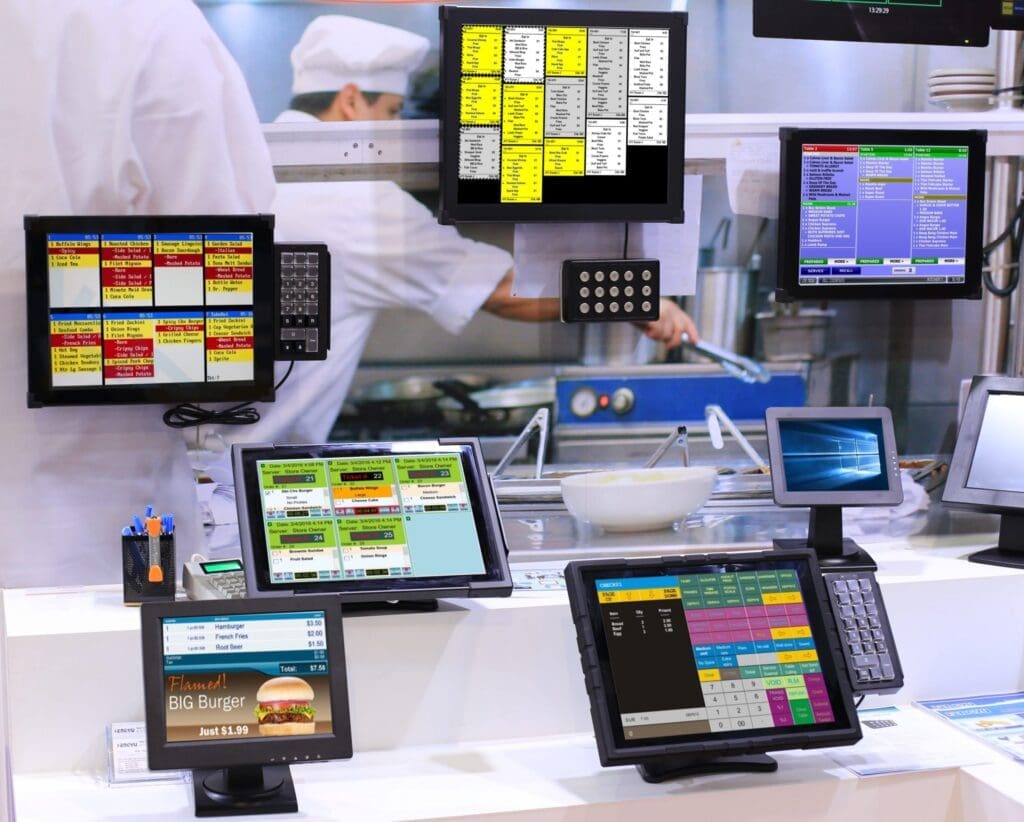
This complexity is compounded by third-party delivery partners like Deliveroo and Just Eat, who introduce their own separate KMS tablets into the kitchen.
The result is a kitchen working with multiple Kitchen Display Screens, all showing orders from different channels. It makes it next to impossible for the team to keep up with orders coming through.
How can they identify which order came through first from multiple screens? If there are multiple kitchen stations, how can they ensure that everything is ready at the right time?
This chaos is also (un)lovingly referred to as Tablet Hell.
How does kitchen chaos affect growth?
Kitchen chaos has a direct impact on the quality of items coming out, the time it takes to get them out, and your customer experience.
Some operations try to get around it by manually inputting orders from certain channels – Deliveroo, for example – into their POS. But this is a time-consuming process and often results in inaccurate orders thanks to human error.
In the end, stressed kitchen teams are rushing to get orders out, using a system that feels like it’s working against them. Dishes take a long time to get prepared, and too often they’re inaccurate when they do come out.
“It was manic. We used to have a huge variance of what Deliveroo said we’d made vs what the till said because the team would easily miss off a drink or a side when keying orders into the POS.”
David Ellison
Chief Operating Officer, Deep Blue Restaurants
Not only is this a bad experience for the customers (who might not choose to come back), it’s also an unsuitable foundation from which to grow.
67% of operators state their main business focus is on growing revenue and number of customers. But with a fragmented KMS, your kitchen simply isn’t set up for it. If the team is struggling to accurately and efficiently fulfil the orders they’re getting now, how can they possibly fulfil increased orders from additional order channels?
Your KMS might be actively stopping your business from being able to scale.
The better way to manage your kitchen
This isn’t to say that a KMS can’t help you grow, though.
It’s a case of changing the way your tech stack works.
We’ve established that the root cause of kitchen chaos is multiple point solutions resulting in multiple tablets.
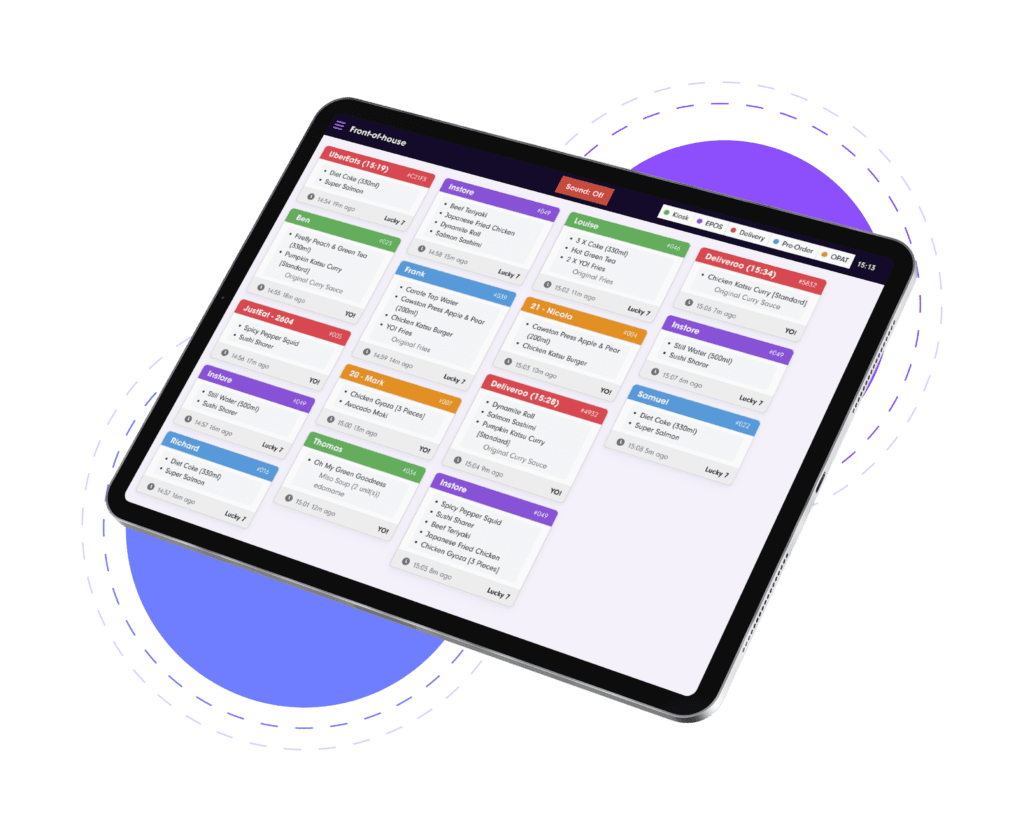
So the answer is a single KMS, that displays every single order – as they come in – from every channel you operate with.
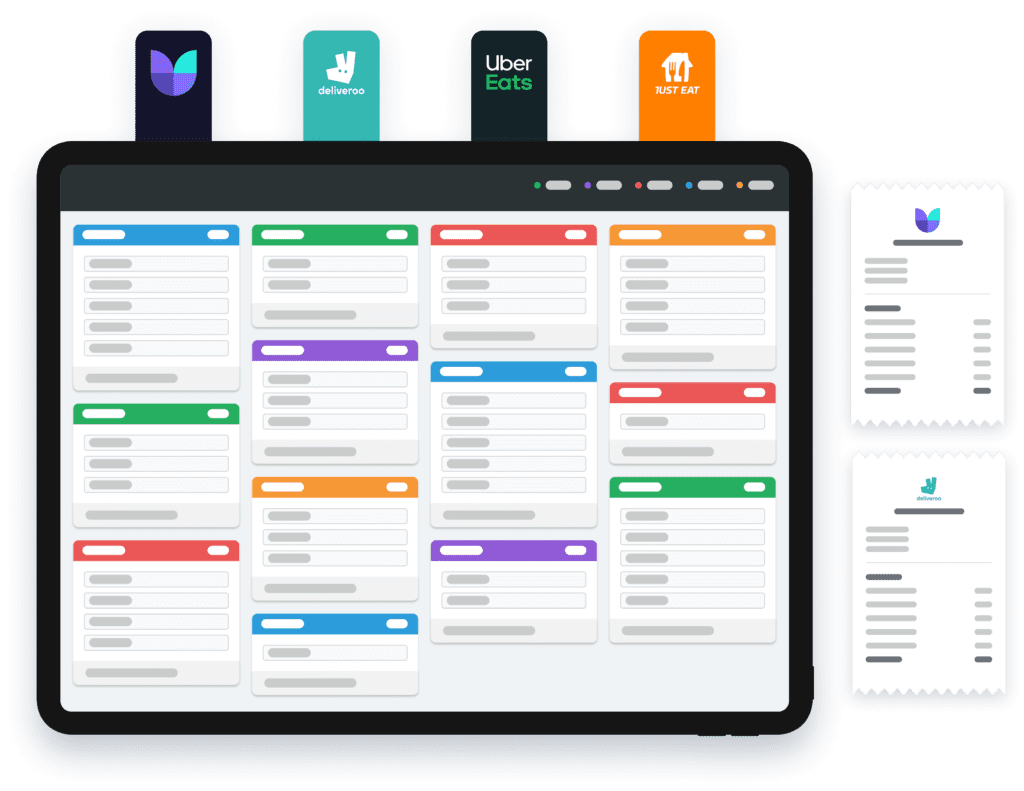
But this generally isn’t possible when you’re working with a variety of individual tech providers.
Instead, moving away from bolting point solutions around a POS, and instead working with as few tech providers as possible, makes your KMS much more efficient.
This doesn’t mean you should provide fewer order channels. It just means finding the partner that can manage your entire operation in a single platform.
With a single system, your KMS can pull orders from every single channel. This banishes the need to have multiple tablets showing different order streams, and reduces the chaos in the kitchen.
It gives your team the breathing space and structure to fulfil orders on time, accurately, and with confidence.
“Now with Vita Mojo, orders are auto-accepted and go straight to the kitchen. It saves time, with less manual input and far less human error.”
David Ellison
Chief Operating Officer, Deep Blue Restaurants
And when you increase footfall or open new order channels? Your KMS is ready to empower your team to calmly fulfil those additional orders instead of adding more stress.
By simplifying the way your tech stack works, your KMS can become a secret weapon in unlocking growth and revenue, confidently.