3. Health is a key consideration for consumers
And it should be for restaurant businesses too.
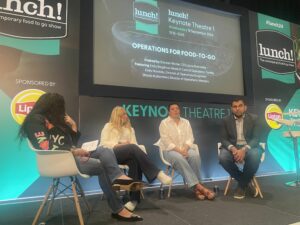
Shannon Goldsmith points to some interesting stats for new health opportunities. With 50% of food-to-go consumers being satisfied with the range of healthy options available, things are looking positive, but there is plenty to build on.
Spencer Craig, Founder and CEO of Pure, reminds us that health can mean different things to different people: “Might be allergies, might be cultural, might be fitness, low carbs, organic. It means a lot of different things.”
Itsu’s Chief Growth Officer Jason Cotta anticipates more interventions from the government where promoting healthier lifestyles is concerned.
“The NHS is underperforming and underfunded,” he says. “Whatever they can do in the long run that reduces the impact on the health service they will do. If they were to, say, start capping calories on dishes, that would give our industry a massive challenge. As a direction of travel, it’s much more likely now than it was before.”
4. Be nimble, adaptable and able to cope with change
Operational agility and integration of new technologies were also big talking points.
“You have to be able to innovate,” Shereen Ritchie says. “There are amazing brands out there winning at the moment, because they’ve found a way to be authentic but innovative. Turbulent times are the new normal.”
Charlie Warren, Head of Operations at Pizza Pilgrims, speaks about price sensitivity and the need to be quick to respond to bad experiences.
“The only time we get questioned about price is when we’ve not delivered on what we’ve promised,” she says. “If there was a grumpy team member, or the sites weren’t clean enough. When we don’t deliver what we want to deliver, that’s when the question of price might come up.”

Being able to make things right quickly is one part of being agile. But so is being on the front foot when it comes to reaching and engaging with new customers.
For Shannon Goldsmith, this is partly about being visible in new locations – and using digital kiosks or vending machines to capture passing footfall. It also might be about the product.
For instance, launching new caffeine-free, specialist drinks to target younger consumers – and reacting to social media trends.
When it comes to technology, Peach 2020’s Peter Martin reminds us that customers like tech if it improves the experience. Especially if they can order and get the bill quickly. Real-time data is also key to acting quickly, as noted by Itsu’s Jason Cotta: “Your ability to collect data through your apps, you can link that to the kiosk. We’re able to use that to leverage menu development.
5. Focus on culture to retain the best employees
Another focal point for the hospitality industry in 2024 is workplace culture. A positive workplace experience for staff makes for a positive customer experience for your guests.
But it has to be authentic.
“The most important thing in our industry is the people,” Shereen Ritchie says. “If you look after the people, everything else follows.”
For Ritchie, culture always comes from the top. A good example of progressive action – in the case of Buns From Home – is working to get more women on boards.
“As you go up and get more into leadership roles the dilution and diversity is where we have a massive problem,” she adds. “It’s something that we need, as an industry, to get behind. You’re going to fix some of the turbulence in the industry by having women leaders.”
A positive work culture leads to better staff retention. This is fundamental to being a competitive business today, but is also crucial if you want to scale up tomorrow.
Peter Martin points to a number of things that staff want in 2024: flexibility, communication via mobile, recognition for good work, training (via digital channels) and – of course – more competitive wages.