Discover how Bunsik is scaling operational discipline to franchise at pace Register now

Creative foodies behaving like a tech team: Inside The Salad Project’s innovation story

Clem Haxby, Director of Product at The Salad Project, shares how a team with no tech background built a loyalty-led digital growth engine.

Clem Haxby is the first to admit that The Salad Project did not start out with a grand technology strategy. On stage at MCA Innovation Conference 2026, the Director of Product laughed off any idea that it was all mapped out.

However, what the brand did have in 2021 was a clear picture of the experience it wanted to give guests. That picture, more than any roadmap, has shaped its technology since.

Here are some of the highlights from Clem’s conversation with Danna Gurbaxani, Chief Revenue Officer at Vita Mojo.

A tech business… with no tech background

When The Salad Project opened, the fashionable line among fast-growing quick service restaurant brands was: “We’re a tech business, we’re not a food business.” The founding team liked the sound of that, until they realised none of them knew much about tech.

Clem’s background is in culinary arts, and the co-founders, James and Florian, are hospitality specialists, not tech experts. So the thinking became, “We want to create a hospitality experience that didn’t exist in the QSR realm already.” And for The Salad Project, that meant meeting customers where they already are, rather than trying to create something they didn’t realise they needed.
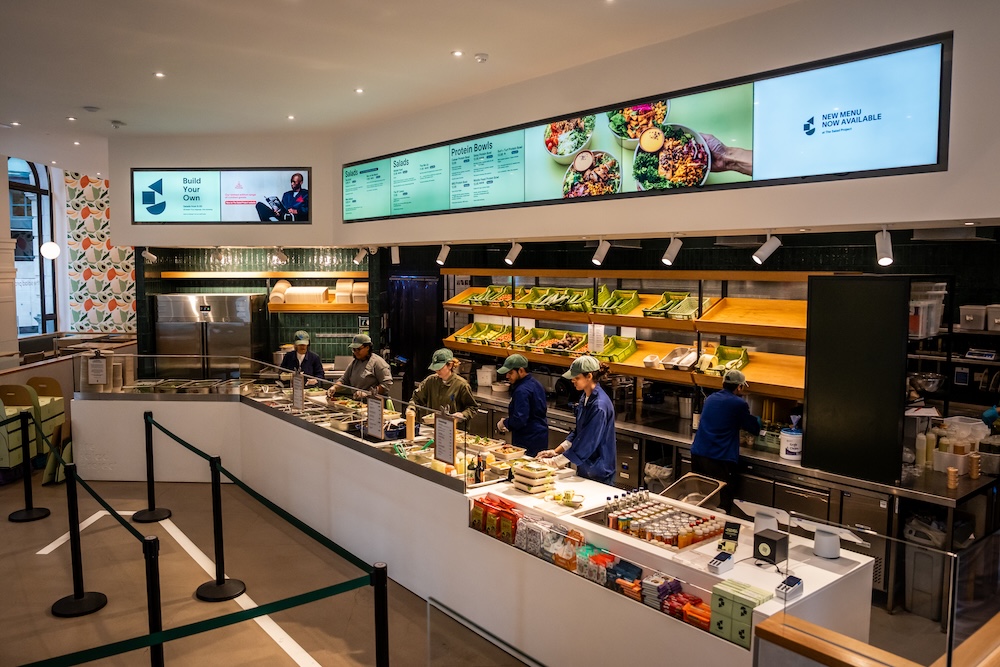
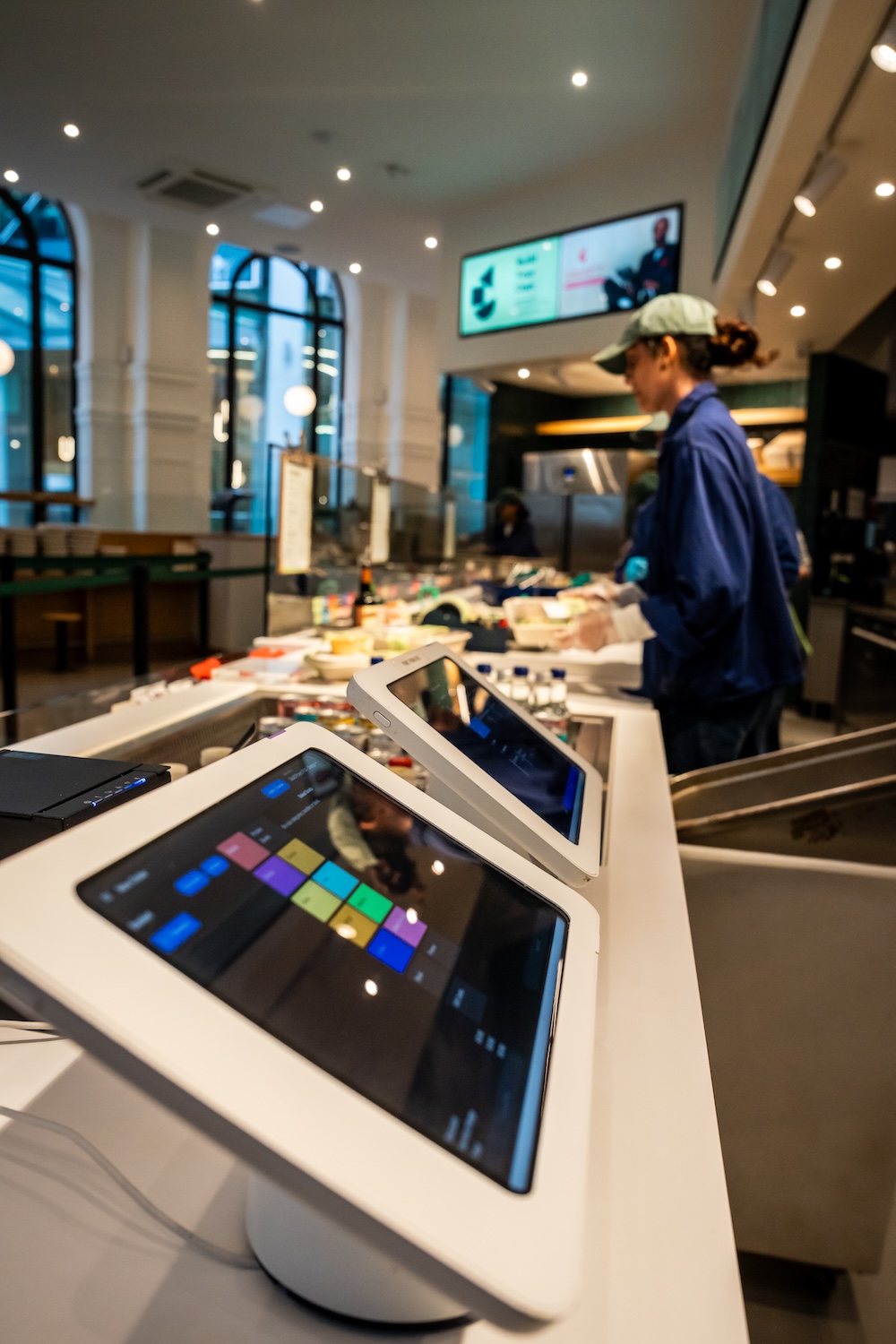
inside the salad project restaurant in Bank

The launch goal was simple: queues out of the door. But then, as Clem said, “People get quite angry when they have to queue for too long.” So the goal became: “We need to be really quick at serving the salads, so Ops can deal with that, and then for the people who just have no time, which is lots of our customers, we thought, from day one, we need to make sure there’s a hack: skip the queue, order online.”

This defined The Salad Project’s experience from the start: the operations team focused on speed, and for any customers still short of time, Click & Collect offered a way to skip the queue altogether.
So that was really the only strategy, we need to be able to give people a quick queue and no queue if that’s what their day requires.
Clem Haxby
Director of Product, The Salad Project

Choosing one partner over a patchwork

This early stack had a gap at its centre. The Salad Project launched with a different POS provider, and its tills, loyalty scheme and online ordering were unable to share data.

As Clem put it, “Again to show how little strategy there was at the time, we had no link-ups between our in-store experience and loyalty system for customers and online. So despite us wanting to be this 360 brand, meeting customers wherever they are, we weren’t actually talking to them about it.”

So two and a half years ago, the business faced a choice: bring in another third party to stitch the data together, or commit to a single platform. It chose Vita Mojo, which was already providing its Click & Collect platform.

As Clem said, “If we’re going to make this work, either we can bring in another party to try and link up all of our data sets, or we actually just put all of our eggs in the basket with one really brilliant partner, which has been Vita Mojo, to make sure that we can give our customers loyalty that carries from in-store to online.”

We actually just put all of our eggs in the basket with one really brilliant partner, which has been Vita Mojo.
Clem Haxby
Director of Product, The Salad Project

Clem was candid about the bumps along the way. Vita Mojo took over the POS first, while a third-party loyalty stamp system stayed in place, and the app launched before guests could technically earn points through it.

But now, as Clem put it, the brand has “an epic experience for our customers where they can, regardless of what store they’re in, either order to skip the queue, they can order on Deliveroo, or they can come and queue and every single time they visit us they can points that they can redeem on any of those channels, to continue their love of The Salad Project.”

From buying software to building it

In the early days, Clem said, the attitude was simple: Vita Mojo had a solution, so the team bought it and used it. Now that the founders are “no longer chopping chicken and serving salads” themselves, there’s more time to think about how the technology could really benefit the brand and its customers.

This vision shows up in quarterly co-innovation sessions with Vita Mojo. Some projects remain exclusive to The Salad Project, so the brand doesn’t become another “one-coloured QSR experience”, while others benefit every single Vita Mojo customer.

Clem’s team of recipe developers and product people now behaves like a tech team. It works in sprints, and each person has a quarterly goal to build something that helps the business scale. This quarter alone, it has built live forecasting for suppliers and store purchasing, plus Absolutely Salad Project, a tool that gives guests full transparency on what they are eating.

We’re a team of creative foodies fundamentally, but we’re actually behaving like a tech team.
Clem Haxby
Director of Product, The Salad Project

The bigger change is in the conversations that have opened up between the brand and the vendor.

Team members who once saw Vita Mojo as just a tool now arrive at Clem’s desk with ideas about what it should do differently. As Clem said, “Because we’re now able, as tech novices, to build things, it means we push you guys [Vita Mojo] harder. Now I have a team that is constantly coming to me saying, ‘Clem, this isn’t working, this is what we suggest we should change’. The questions we’re now asking our partners are a million miles away from any question we would have even thought to ask 5 years ago.”

Danna welcomes the pressure. Vita Mojo runs across thousands of sites, she said, but its job is to help each brand create something interesting and unique, not to bend the brand to fit the software. As Danna said, “What I really appreciate about working with Salad Project is the absolutely infectious energy, and how the team is unapologetically ambitious about the guest experience.”

The old divide between vendor and brand is fading, and AI is speeding up innovation on both sides.

A loyalty lesson learned the hard way

The first app incentive The Salad Project launched is a story that Clem can now tell with a smile. “Wow, God, we’re innovators!” And we thought everyone in London would suddenly be completely obsessed with The Salad Project because we have an app.”

However, the simple “download the app, get a free salad” offer had no email or mobile authentication. One co-founder watched the same customer claim a salad again and again under new email addresses. Nobody could say whether those people ever returned to buy a full-price salad.

So the August 2026 relaunch was built around repeat visits rather than a single freebie.

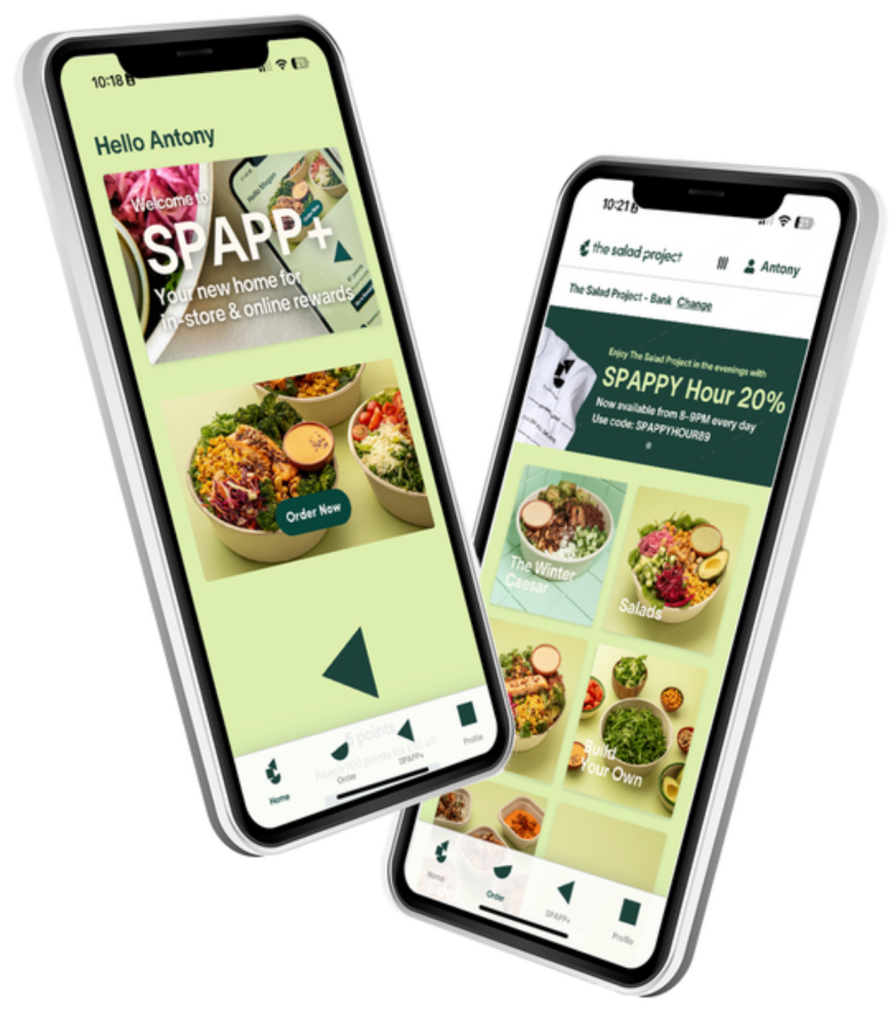
The Salad Project app as shown on two mobile phones

New users now get £5, valid for two weeks, and redeeming it unlocks 15% off for the rest of their first month. For a premium product, the aim is to build a habit, not to attract one-off discount hunters.

The early numbers are impressive. Weekly app downloads, previously around 2,000 to 3,000, have tripled. Loyalty members now account for 45% of transactions, up from 25%, and the customer database has grown by 30,000 in roughly six weeks.

3x

weekly app download growth since launch

45%

of transactions are from Loyalty members

30,000

customer database growth in six weeks

Habits run through everything The Salad Project does. The brand even uses the word HABIT as an acronym for its product checklist: every dish must be Hearty, Adaptable, Best in the business and Bold in flavour, Innovative and Trustworthy.

As Clem said, “We’re really obsessed with habits, and what’s great now is we can use technology to make sure we’re holding ourselves to that standard from a product perspective. We’re also giving it to our customers and supporting their habit building from a reward perspective.”

Now that thinking is coming to loyalty. Ten visits over two years means far less to the team than 10 in a fortnight, or a guest whose visits creep up month by month. Connected first-party data lets the team spot and reward those patterns.

“These are the kind of data points that we want to track and reward, so that people’s experience with The Salad Project is unique to them, as opposed to something that everyone experiences in the same way.

We’re building a product that’s supposed to give you a unique nutritional and flavour experience, so why would we not mirror that in our loyalty reward scheme?
Clem Haxby
Director of Product, The Salad Project

Standing out in a crowded salad market

The competition has obviously grown. When The Salad Project opened, Clem said, London had roughly six salad bars. By last November, the team counted 63.

To stay unique, rather than chase every daypart, the brand owns one moment. That means no breakfast menu. As Clem said, “I’m not going to spend my very limited time developing breakfast. I’m going to use it to make sure that my Caesar salad is the best Caesar salad in London, but also the world, and is delivered to customers in the best possible way.”

That means obsessing over every detail, in store and online: the site design, the volume of the music and how it shifts from day to evening, even how the Deliveroo page helps guests choose.

For Danna, that level of care is exactly what technology now has to keep up with. SaaS platforms have always been one-to-many by design: one product, built once and rolled out to every customer. AI is changing that, allowing Vita Mojo to build features unique to a single brand, like the projects Clem has described. “Now we’re able to deliver things that are one-to-one for your brand so that you can deliver things that are one-to-one to a guest,” Danna said, “I think that’s truly the essence of it all.”

The Salad Project is putting AI to work inside its own business, and Vita Mojo is doing the same. The result is a partnership that lets a growing brand stay personal. For a business built on the idea that every guest’s habit is their own, that matters more than anything.

Simplify scale with
Vita Mojo

Ready to unify your restaurant operations and grow faster?

Want to see more from Vita Mojo?