



If you asked me to score the quick-service restaurant AI market on a hype-to-reality scale right now, I would give it a six out of 10. Which is an improvement. Operators are more open to digital transformation conversations than at any point in my 14 years in engineering. AI deserves a lot of credit for that.
But the gap between six and 10 is wide. It’s filled with startups wrapping existing LLMs in a new interface and presenting that as innovation. With enterprise pilots that quietly stall after a handful of sites, and with boardroom conversations that confuse the question, “Do we have AI?” with the question, “Is our business actually improving?”
I’ve spent the last 17 months at Vita Mojo driving engineering strategy, including how we apply AI and machine learning to real QSR operations. Before that, I spent years building distributed systems and databases at companies including Docker, Kubernetes, and AWS. I have seen a lot of technology cycles. This one follows a familiar pattern: real capability and genuine use cases, surrounded by tonnes of noise.
Here is my honest read on where the industry stands.
The wrong question is being asked
Most AI conversations I see in QSR start in the wrong place. Operators and their boards ask: “We have this technology available to us, how do we apply it to our business?”
But that’s backwards. The right question is: “We have this business problem, can machine learning help us solve it?”
Those two questions lead to very different decisions. The first produces a solution looking for a problem. The second produces a clear brief, a measurable outcome, and a vendor evaluation process grounded in what you actually need.
Let’s look at what happens when operators get this the wrong way round.
What is failing, and why
The most instructive example of AI not working in QSR right now is voice-over drive-thru. McDonald’s has been working on this for five years, starting with IBM technology in 2021. The complaints were significant. It is now testing with Google Gemini, but only in five stores out of roughly 40,000 sites worldwide. That suggests a lack of confidence in the solution. Other fast-food brands tried a similar approach and stopped.
The interesting thing is that the speech recognition technology itself is not the problem. These models are genuinely good. You can have a complex conversation with a modern LLM and it understands you completely.

The failure is the layer that comes after. Once you’ve transcribed a customer’s order, what happens next? Do you have an intelligent system that can map that text to the right items in your ordering system? Can it handle a customer being told a modifier is out of stock and prompt them to choose an alternative? In most implementations, the answer is no. Some operators have quietly used offshore support teams to fill that gap manually, which rather defeats the purpose.
Separately, there is a broader category of failure: applying generative AI to problems that are not generative. Generative AI is excellent at generating content, such as text, images, reports, and documentation. That’s what it was built for and what it does well. But if you want to forecast demand, calculate inventory, or build a recommendation engine, you need different technology. A LLM is the wrong tool for those jobs, and using one tends to produce outputs that look plausible but are not reliable enough to act on.
What is actually working
Two categories stand out.
The first is recommendation systems. These existed before LLMs, but LLMs have genuinely improved them. The old approach segmented users into broad categories and recommended based on that grouping. LLMs understand semantic connections at a more granular level.
Rather than knowing someone is interested in a broad category, the system understands the chain of associations within it. In QSR terms, that granularity translates to more accurate upsell and cross-sell recommendations at the digital ordering stage.
The second is computer vision, a mature technology that has been largely overlooked in favour of newer and louder AI trends.
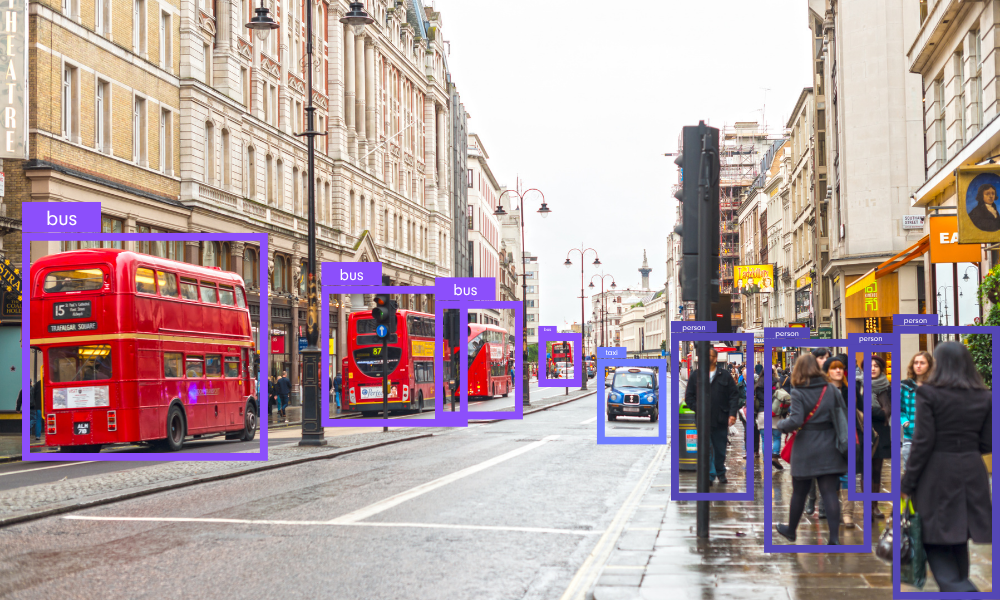
Chipotle applied computer vision to track order preparation and food waste across its kitchens, significantly reducing food waste. That is the model the industry should be following: proven technology, a specific business problem, a clear KPI, and a measurable outcome.
Forecasting and prediction tools are also delivering for operators who have the data infrastructure to support them. These are not LLM-based applications. They use established machine learning methods, and when the data is clean and comprehensive, the outputs are reliable.
The data problem operators do not see coming
Here is the most common failure mode I see in AI implementations: operators underestimate how much the output quality depends on input data.
Any AI or machine learning application is only as good as the data it runs on. This is so fundamental that I use it as a filter when evaluating vendors. If a company approaches you and offers AI without asking for your data, that is a red flag.
No serious AI implementation can function without it. A vendor claiming to deliver AI magic without your operational data is either misrepresenting what the product does, or filling the gap with something you have not been told about.
Effective forecasting in QSR needs more than order history. It needs weather data, external events, holidays, and local fixtures. The correlations between those inputs and customer behaviour are where the predictive value sits. Building the infrastructure to collect, clean, store, and distribute that data is a significant engineering challenge.
At Vita Mojo, we have been collecting operational data for around eight years. That dataset is one of the most valuable things we have. It is the foundation that makes meaningful AI applications possible for the operators we work with. A startup that entered the hospitality technology market last year cannot have that foundation, regardless of how sophisticated its interface looks.
Three questions to ask any AI vendor
Before committing to any AI product, ask three things.
First: Is this your own model, or a wrapper around an existing LLM such as OpenAI or Claude? There is nothing inherently wrong with building a product on top of an existing model. But the vendor should be transparent about it and able to explain clearly what their own logic layer contributes. If they cannot explain the technology, that is a signal.
Second: Is generative AI actually what I need? This is a question to ask yourself before the meeting. If your goal is to generate content, generative AI is the right tool. If your goal is forecasting, predicting, or recommending, it is not. Be clear on this before any vendor has the opportunity to frame the problem for you.
Third: Where does your data come from? The largest AI models are running short of real-world training data, and there is a growing trend of using synthetic data (AI-generated text used to train other AI models). Output quality degrades when training data is not grounded in real operational patterns. Ask the vendor directly. Demand specifics on the size, source, and quality of their datasets.
The right position for a growing restaurant operator
For a multi-site operator without a data science team and a constrained tech budget, I have a clear recommendation: do not build it yourself, and do not buy a collection of disconnected point solutions.
Building an in-house AI capability means hiring machine learning engineers, data engineers, and the leadership to manage them. That is expensive, slow, and a distraction from running and growing a QSR business. You are a restaurant operator, not an IT startup. The operators getting results from AI are not building it themselves.
Buying fragmented point solutions creates a different problem. Each product you add is another integration to manage, another vendor relationship, another potential point of failure. When two systems update independently, you get contradictory behaviours. The more pieces you add, the more engineering overhead you accumulate and the less reliable the whole stack becomes.
The more effective approach is to work with a single integrated platform that covers the operational chain. When voice ordering, your POS system, and your recommendation engine operate as one unit, they share data, reinforce each other, and improve over time through feedback loops.
Adding one device from a completely different hardware ecosystem to an otherwise integrated setup is a useful analogy: the device works in isolation, but the integration cost is constant and the friction never fully goes away.
What the next 12 months will show
The operators who get AI right over the next 12 months will not be the ones with the most AI products in their stack. They will be the ones who asked the right question at the start.
The two largest cost lines in most QSR businesses are labour and food ingredients. Every technology investment, AI or otherwise, should be evaluated against those two numbers. Does it reduce labour costs? Does it reduce food waste or ingredient spend? If the return on investment is clear against those metrics, pursue it. If not, the sophistication of the technology is irrelevant.

Sometimes the right answer is not AI at all. Sometimes it is well-built software that solves a specific operational problem. Software is not obsolete. A tool that demonstrably reduces costs does not need an AI label to justify its place in your stack.
The industry is frustrated right now, and understandably so. There is too much noise, too many conflicting signals, and not enough honest guidance from people who have actually built these systems. That guidance is what operators need. Let’s start providing it.