

Ops Directors usually move to a different tech stack because the old one’s starting to creak. They’ve thought about the kitchen workload, the integration risks, the staff training that comes with a new Point of Sale. All the obvious things, and rightly so. Most operators plan for these well.
What I’ve noticed, after five years of helping UK Quick Service Restaurant (QSR) operators scale beyond 10 sites, is that there are three other things they don’t always prepare so well for.
Three things that catch even the most experienced Ops Director off-guard, in roughly the same order, almost every time. And none of them is quite what you’d expect.
Here is what I see almost every quarter…
01. The menu rarely gets the attention it deserves
When a multi-site operator moves to a new tech stack, the menu work is usually the first thing to be under-resourced. And honestly, I do understand why. It feels like the easy part of the puzzle.
The POS rollout is highly involved. The aggregator integrations are also highly involved. The same with the Loyalty piece. The menu, by comparison, feels like just a question of copying across what you already have.
But that’s the trap. Moving to a new tech stack is actually the ideal moment to give the menu the attention it rarely gets: to revamp it, refresh the imagery, and fix the things that didn’t quite work last time. Instead, more often than not, the existing menu just gets copied and pasted across as it is.
The same lack of attention shows up in a more technical way too. Duplicate records creep in, the old content gets reused on top of them, and no one stops to build it cleanly. That, in my experience, is where most rollouts start to come unstuck.
I worked on a rollout where this played out almost exactly. It was a POS-led operation with a tight in-store flow and staff working the tills like a well-oiled machine.
A few stores in, the inventory data started telling us something. The same items were being created over and over: one burger logged as two slightly different records, the same sauce appearing twice. Each new store and channel had been adding its own version of items that should all have pointed back to a single master record. And as we scaled, those small inconsistencies multiplied fast. Once the underlying data breaks like that, your revenue reporting breaks with it.
Here’s what I’ve found myself saying to every operator since then. The menu really is the backbone of everything you do in a restaurant. When it isn’t built correctly, you can feel it all the way down the line: your customers get confused, your operation gets messy, your data breaks, and ultimately your revenue takes a hit.
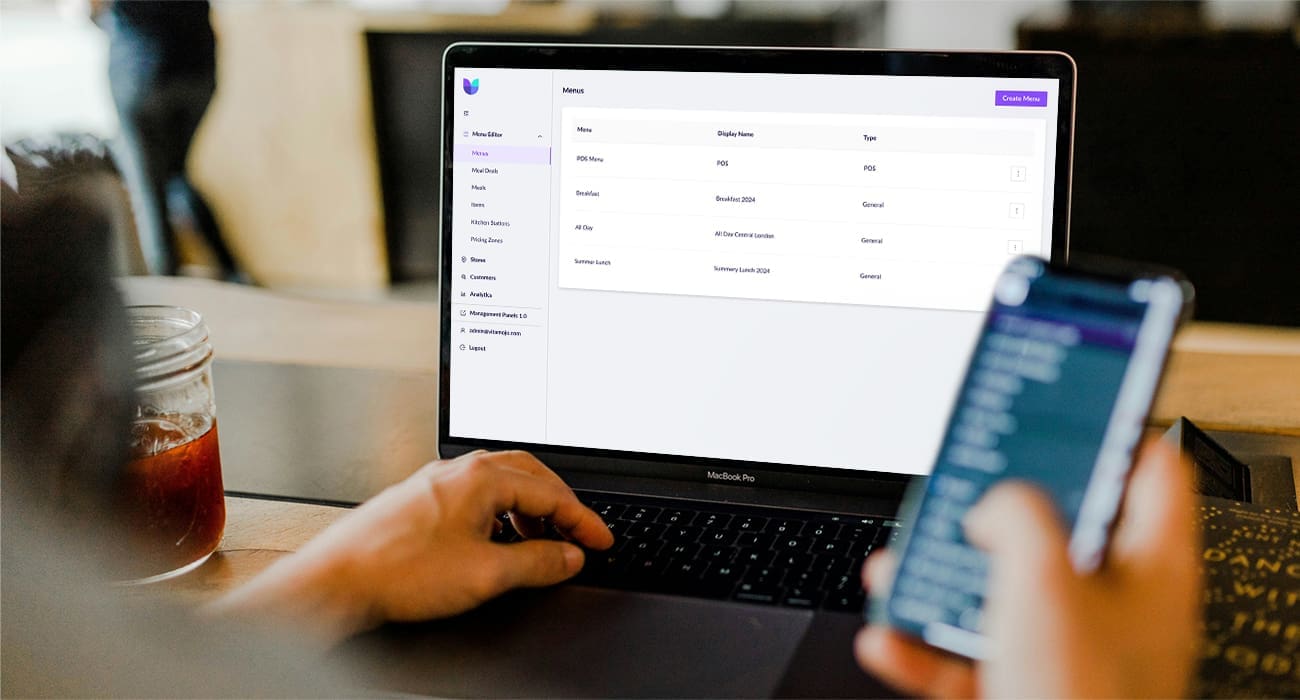
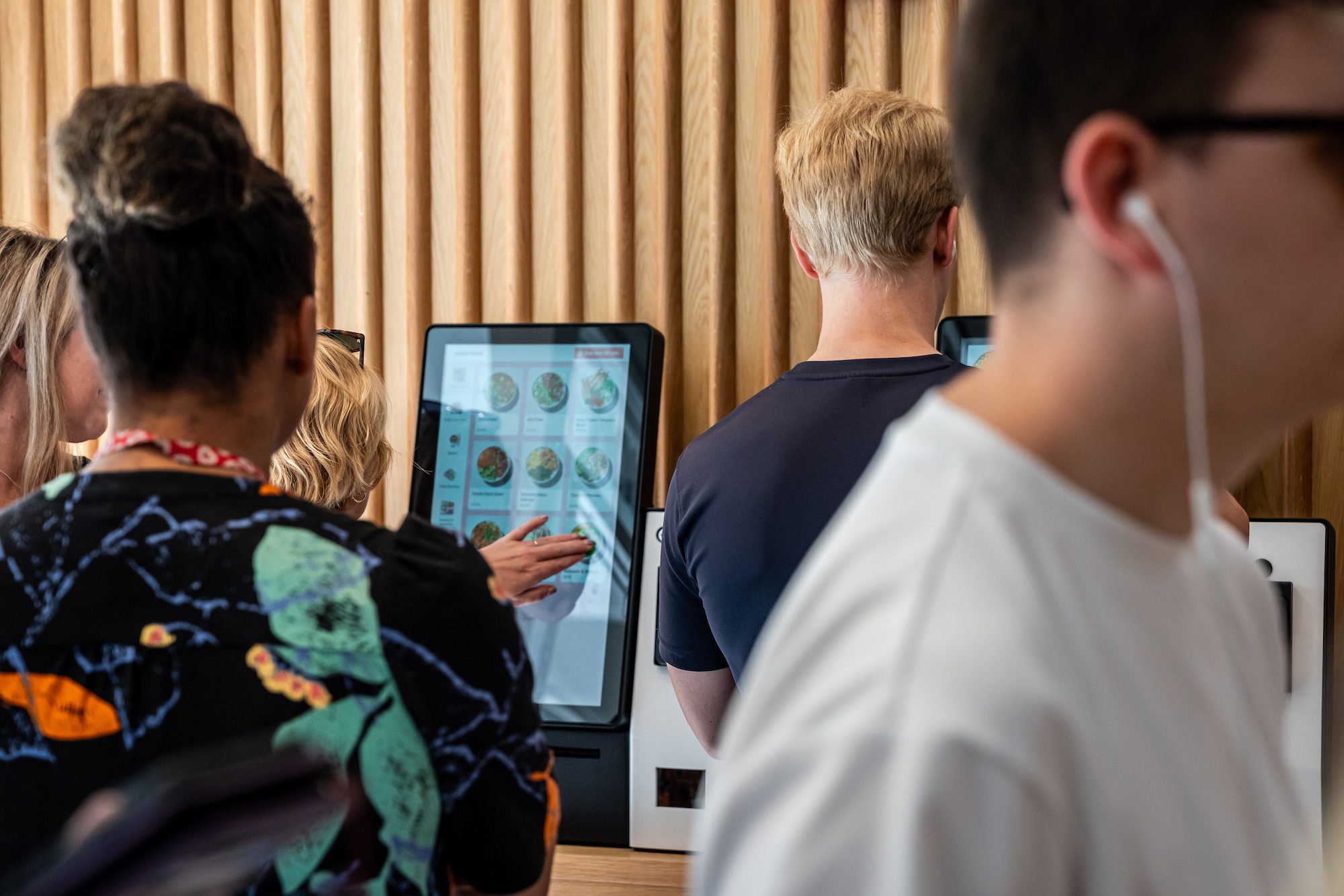
The fix, when you find it, is structural rather than technical. You want to have one person inside your head office whose job is to own the menu. Although I don’t really think of this role as a ‘menu manager’. The way I’d frame it is, this person’s job is to protect the backbone of every revenue stream you run, across POS, Self-service Kiosks, Click & Collect, your mobile app, and every delivery aggregator you appear on.
They need to know the menu inside out, and ideally they take maintenance ownership of it from day one of going live.
When this role works well, the payoff tends to be immediate.
The owner is the person who gets to the work that usually falls through the cracks at go-live. Basket recommendations, one of the features our system offers, are the obvious example: a strong driver of Average Order Value (AOV) and simple to configure, yet rarely switched on, because by go-live the team is stretched thin and it’s the first kind of step to drop off the list. An owner is the person who picks it back up, and because they’ve kept the menu well-structured underneath, it actually delivers when it’s turned on.
The same is true for our Kitchen Management System (KMS) counter, another feature in Vita Mojo’s system. It tells kitchen staff in real time how many beef patties they need to grill or how many onion rings they need to fry, which is hugely useful on a busy line, but only when the menu underneath has no duplications. If the same patty exists as two records, the count is wrong, and a tool you brought in to help the kitchen quietly starts working against it
My honest advice is to treat the menu transition as the most important piece of your tech transition, not the least.