
UK Quick Service Restaurant (QSR) brands scaling past 50 sites consistently underprepare for three operational shifts alongside the tech stack: menu architecture, cross-team buy-in, and in-store adoption. A fourth shift, the data layer, is where margins will be won or lost across 2026 and 2027. The unified operating layer that runs your estate has to support all four.
In this guide, we’ll discuss what changes at 50-plus sites, what every operations director should plan for, and how to evaluate the technology that holds it together.
What changes operationally at 50 sites?
Six sites are hard. 25 sites are harder. 50 sites is where the operating model has to mature. The brands that scale cleanly past 50 sites understand which operational shifts are coming, plan for them in advance, and build (or buy) the stack to support them.
-
Estate complexity. At six sites, you probably know every store manager. At 50, you are managing multiple regions, multiple formats, and multiple channels. The variance between your best and worst sites on site-level Profit and Loss (P&L) widens, and the reporting cadence that worked at 15 cannot keep up.
-
Aggregator share. Delivery becomes a larger share of revenue. Commission economics, which looked manageable at six sites, becomes a board-level question at 50. Buyer concentration risk is exactly why first-party data matters more at scale.
-
Labour costs. National Insurance Contributions (NIC) and minimum wage changes hit harder when you have 50 sites absorbing them. Every basis point in labour cost shows up in site-level unit economics.
-
Menu architecture. Point of Sale (POS) menus, aggregator menus, Click & Collect menus, Kiosk menus, mobile app menus. All five need to stay in sync. Drift across 50 sites corrupts downstream data in ways that are expensive to unpick.
-
Data. Operators stop treating data as a weekly report and start treating it as a daily decision tool. Real-time reporting stops being a feature request and starts being a requirement.
-
Marketing complexity. Loyalty programmes, first-party data, regional campaigns, local store marketing. None of these work without a unified data layer underneath.
-
Compliance. Healthier Food Standards (HFSS), allergen management, supply chain consistency, food safety. Each new site adds compliance surface area.
-
Decision-making. The founder who knew every store can no longer be in every conversation. Process replaces presence. Stack replaces gut feel.
The four operational layers that have to work
After many years working with UK QSR brands scaling past 50 sites, our Solution Consulting team has watched the same four layers determine which operators scale cleanly and which scale with friction. The technology is one factor. The four operational layers underneath it are the other.
1) The menu is the structural decision your stack is built on
The menu is the backbone of everything a multi-site QSR brand does. Build it wrong and customers get confused, the operation gets messy, and the data breaks.
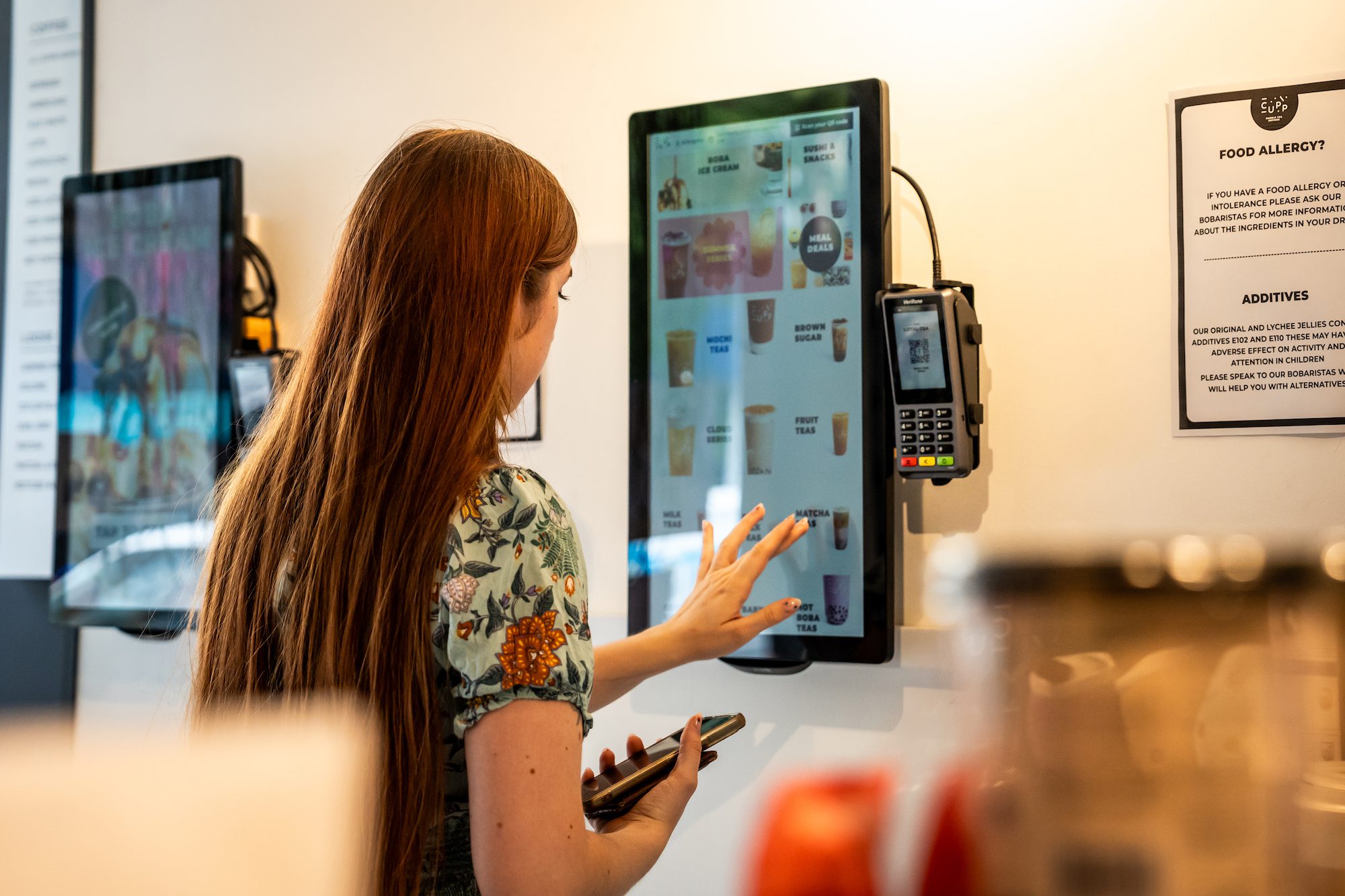
Many operators undervalue menu work during a tech transition. They ask for a copy-paste from the old system. That works at three sites, but then breaks at 15. Then by 25 sites, the menu drift creates inventory data duplications that corrupt revenue reporting. At 50 sites, those duplications cost more than a dedicated head-office menu owner would.
This is a structural problem, not a technical one. Brands scaling past 50 sites need one person in the head office who owns the menu. Their job is to protect the backbone of every revenue stream: POS, Self-service Kiosks, Click & Collect, the mobile app, and every delivery aggregator the brand appears on.
The payoff is direct. Basket recommendations only work when the menu underneath is clean. The Kitchen Management System (KMS) counter, which tells kitchen staff how many items to prepare in real time, only functions without duplications. Average Order Value (AOV) uplift from upsell depends entirely on the menu structure underneath it.
Vita Mojo’s Menu Management gives operators self-serve maintenance from go-live. That single menu owner is what makes self-serve worth it.
2) The teams you forgot to invite to the demo
Operations and IT are always in tech decisions. They are the obvious stakeholders, and they will live with the new system every day.
The other teams might come in later. Finance learns the new platform at period-end when reconciliation lands. Marketing learns it the day their first campaign needs to run on it. Customer service learns it the first time a complaint needs a report pulled. Reporting learns it when the board wants site-level P&L.
Every one of those moments is under deadline pressure, and every one is the wrong time to learn a new tool. The problem then falls on the operations team that brought the stack in.
At 50 sites, that friction compounds. A finance team struggling with month-end across 50 sites is not an operational problem, it is a board-level one. Marketing hitting their first regional campaign on an unfamiliar platform carries reputational risk. Reporting learning the system on the day the board wants numbers creates a delay that travels.
The answer, therefore, is a stakeholder map. Finance, marketing, customer service, reporting: identify every team that touches the system and bring them to the second vendor demo. Not the contract negotiation. A few hours of their time in week two saves six months of resistance after go-live.
3) The champion who answers, “Why have you changed our till?”
Head office picks the new tech stack, but by site five, the in-store staff will want to know why.
If no one in the store can answer that question clearly, you have a problem. The staff will find a way to work around the new system. Inevitably, trust erodes before site 10. By site 50, your stack is used differently across regions, and the data shows it.
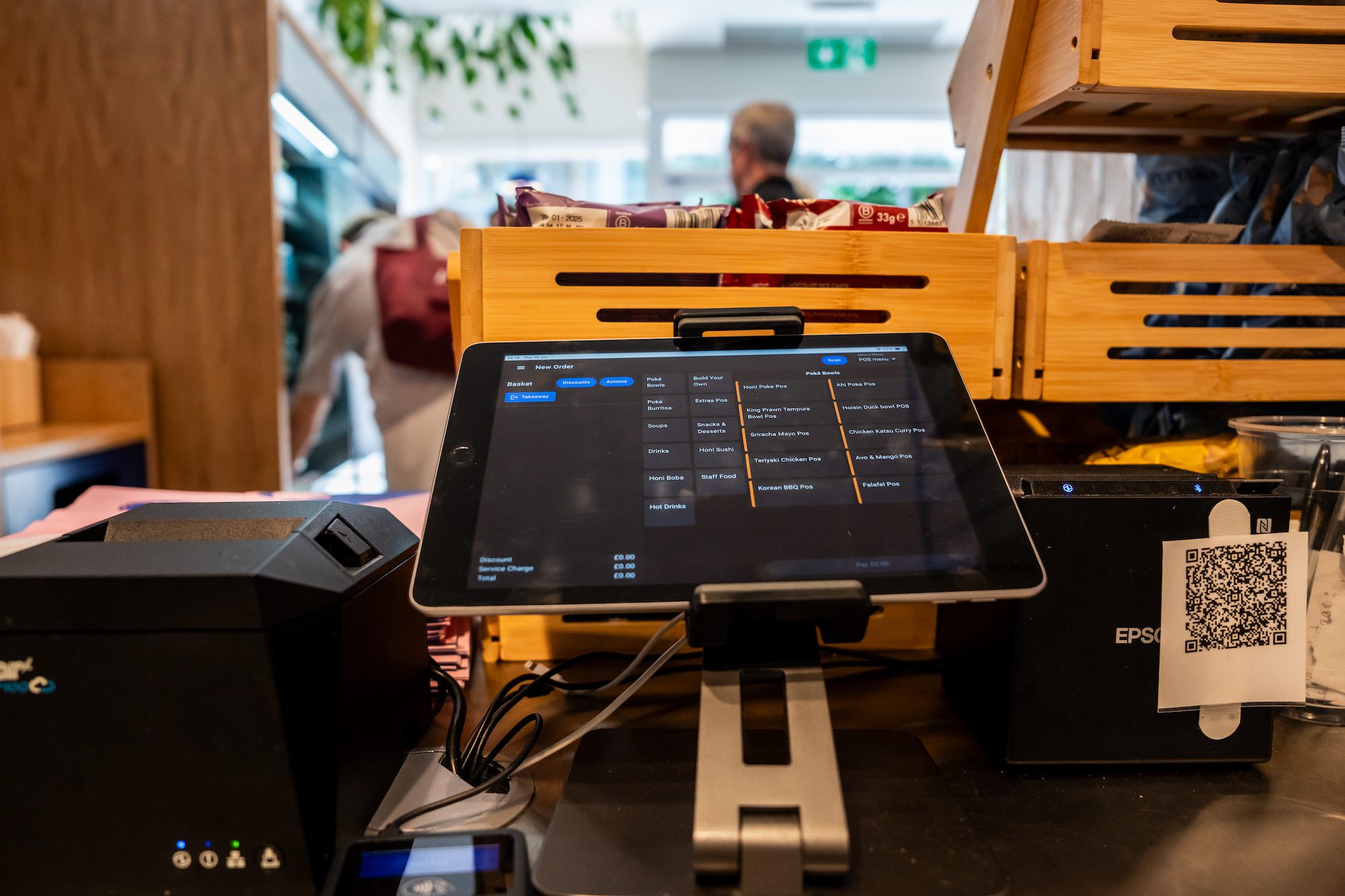
The strongest multi-site operators can solve this with a dedicated champion or ‘super-user’ role. They have one foot in the head office, and one foot in the store. Super-users are close enough to head office decisions to understand why they were made, and they take that context into the stores. They bring friction points back up.
The visible difference at scale is hard to ignore. Stores with engaged champions run cleanly from go-live. Staff ask sensible questions. Workarounds disappear. Stores without a champion can accumulate friction, and at 50 sites, that adds up fast.
The champion is not an extra cost. For a brand at 50-plus sites, a regional champion structure is what separates a stack used consistently from a stack used 50 different ways.
Our Solution Consulting team can work with operators to advise on the champion or super-user structure during onboarding, drawing on years of multi-site rollout patterns.
4) From having the data to acting on the data
UK QSR operators have always had data, they’ve just rarely had the time or in-house skills to digest it. Many run their site-level P&L review weekly, but few act on the underlying numbers daily.
At 50 sites, that gap is where margin lives. A five-basis-point improvement in labour-to-sales ratio across 50 sites pays for an entire reporting investment.
Thankfully, the gap is closing. AI tools are making operational data readable for operators who do not have a data analyst in the room. Ops directors who previously needed someone to interpret a report can now ask the system a question in plain English and get back an answer they can act on the same day.
The unified operating layer
Vita Mojo is the unified operating layer for multi-site QSR brands. One system that supports the menu, the cross-team buy-in, the in-store champions, and the data layer. Built for operators scaling past 50 sites in the UK.
- Point of Sale (POS). The in-store transaction backbone. Built for speed at peak. Trained for QSR-specific workflows.
- Kitchen Management System (KMS). Real-time order flow into the kitchen. The KMS counter tracks live preparation against demand. Built to scale across high-throughput sites.
- Click & Collect, Self-service Kiosks, Order & Pay at Table, Digital Ordering. A channel mix that grows with the operator. Configurable per site, per format.
- Menu Management. Self-serve menu maintenance from day one. Centralised, with site-level configuration where you need it.
- Order Management System. Cross-channel routing for delivery, collection, and dine-in. The single source of truth for every order across the estate.
- Vita Mojo Analytics. Real-time site-level reporting. Cross-channel visibility.
- Implementation. Our Solution Consulting team has rolled out Vita Mojo across UK QSR brands scaling from six sites to 100-plus. We bring the operational patterns, not just the technology.