The restaurant tech guide for scaling QSRs View guide

Hospitality Software Buyer’s Guide 2026: Driving QSR Revenue and Expansion

Discover how ambitious QSR brands choose scalable, efficient restaurant software that drives revenue, boosts throughput, and enables rapid expansion. Includes a vendor scorecard, growth strategies, and real-world examples of QSR tech growth.

Scaling a quick-service restaurant (QSR) brand is about more than opening new locations; it’s about building the operational engine that keeps every site running at peak performance. The right restaurant technology can unlock faster growth, higher revenue per transaction, and a guest experience that keeps customers coming back.
This Hospitality Software Buyer’s Guide guides you through mapping your current hospitality software stack, exploring the two main build options, and posing the nine critical questions every growth-focused QSR brand should consider before investing in new technology.

You’ll also get a ready-to-use vendor scorecard and see how leading brands are thriving with streamlined, order-centric systems.

With the right questions, you can confidently select hospitality software that:

  • Unlocks operational efficiency at scale
  • Enables rapid rollout of new sites, brands, and ordering channels
  • Provides a consistent, exceptional guest experience across touchpoints

This isn’t about surviving. It’s about building the operational engine that fuels QSR expansion.
JUMP TO SECTION:

Understand and optimise your current hospitality tech stack

Before you can make informed, growth-focused decisions about new technology, you need to understand how your current tech stack operates.

Many QSR operators underestimate the number of systems, integrations, and providers involved in their day-to-day operations. Mapping it out will give you a clearer picture of where inefficiencies exist and where opportunities for optimisation lie.

Step 1: Map your providers

Start by drawing out exactly how many providers you work with, circling your POS in the middle. Once you’ve determined how many providers contribute to your tech stack, the next step is to work out precisely what they deliver.

Draw your POS in the centre surrounded by any point solutions

Break the providers down into the separate services they deliver and label each one. You might find yourself adding more dots to your drawing as you break the providers’ services down.

One provider might deliver all your digital ordering channels, but these should be broken down into each separate channel e.g ‘Kiosks’ and ‘Click & Collect’.
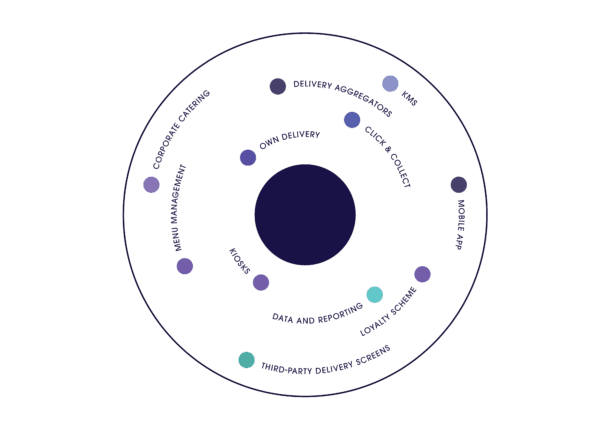
Separate and label each element that the providers deliver

Step 2: Map your integrations

Draw lines connecting each element to reflect any integrations that need to happen to make them work.

For example, does your loyalty scheme need separate integrations to each of your order channels (app, website, offline paper-based)? How does your KMS integrate with your channels?

Draw the integrations between each element

Step 3: Identify inefficiencies

Identify inefficiencies within this setup. Where are integrations costing your team excessive time? What points in your operation are being overcomplicated by multiple providers?

For example:

  • How long does it take to update multiple menus across channels?
  • How long does it take to collate sales data from across your sites and order channels?
  • How easy is it to create management reports across your operation to understand performance and identify areas for improvement?
  • How long does adding new order channels or locations to your tech stack take?

Step 4: Align tech with growth goals

Consider how each system supports your business objectives.

For growing QSR brands, typical goals include:

  • Increasing revenue per transaction
  • Growing repeat customer visits
  • Launching new locations or brands quickly
  • Reducing operational complexity to allow scale

Most importantly, ask yourself:

  • How will a new tech setup enable faster and more profitable expansion?
Need help from hospitality
tech experts?

Book a 30-minute chat with our team to learn how Vita Mojo can
simplify your operations and boost revenue.


Book a demo

Choose between a POS-centric or order-centric approach

Once you’ve mapped your current technology landscape and aligned it with your business growth goals, it’s time to decide how you’ll build the stack that will power your next stage of expansion.

For enterprise QSR brands, there are two primary approaches:

1. POS-centric tech stack

This is the traditional route: start with your POS and integrate other systems to fill in the gaps.

Advantages:

  • Ability to select best-in-class providers for each specific function.
  • Flexibility to switch out individual components.

Drawbacks:

  • Creates a fragmented ecosystem with multiple integration points.
  • More complex to manage and scale as you add sites or ordering channels.
  • Higher risk of downtime if any one link in the chain fails.

2. Order-centric tech stack

A modern approach designed for scalability and speed of execution.

Advantages:

  • All functions of the end-to-end order lifecycle in one system: digital ordering, POS, loyalty, menu management, and reporting.
  • Single source of truth for data.
  • Faster to roll out across new sites or channels with minimal disruption.

Drawbacks:

  • Less flexibility to swap out individual components (although a good partner will keep innovating and adding features).

Which is right for a growing QSR brand?

  • If your growth strategy involves adding locations, launching new brands, or introducing new order channels quickly, an order-centric system minimises friction and allows you to scale with confidence.
  • If you have niche requirements that demand highly specialised tools, a POS-centric approach may still suit, but it comes with added complexity to manage.

Your choice should be guided by:

  • Your current expansion plans (e.g. number of new sites in the next 12–24 months).
  • The resources you have to manage integrations and support.
  • How important speed-to-market is for new initiatives.

Ready to
simplify?

Learn more about our flexible solutions built to simplify operations and drive revenue.

The nine questions every QSR should ask before choosing new tech

When evaluating technology for your growing QSR brand, you need more than a features checklist. The right system should actively remove obstacles, enable speed, and set you up for sustainable expansion.

Here are the nine essential questions to ask both yourself and your potential vendor.

Question 1: How will the tech increase efficiency and decrease complexity?

Two of the most common bottlenecks in multi-location QSR operations are:

Menu management: Updating an item’s price, description, or image shouldn’t be a multi-hour task.

In fragmented stacks, every channel and partner needs a separate update. Multiply that across locations, and it becomes a significant drain on resources.

The ideal system lets you update all menus across all channels in one place.

Managing omnichannel orders: Also known as tablet hell, managing multiple devices for different order channels slows kitchens, increases errors, and limits throughput.

A unified system routes all orders into a single view, reducing chaos and increasing speed.

Questions to ask the vendor

  1. How many separate manual updates will it take to make menu changes to one item across all channels and different sites?
  2. How many hours per day and week will you need to dedicate to making changes across menus?
  3. What is the exponential impact of this on a monthly basis?
  4. Can the team snooze specific order channels when they need some breathing room?
  5. Can they use the tech to operate with separate kitchen stations without getting overwhelmed?
  6. Can the team handle increased orders and still deliver the perfect order, every time?

Question 2: How will the tech help increase revenue and growth across channels?

For a scaling QSR, revenue growth comes from both new locations and maximising value per transaction.

Rapid expansion: You should be able to add new locations, brands, or order channels quickly, without weeks of setup.

Smart menu design: Digital channels should allow for upsells, cross-sells, and promotions that boost average transaction value (ATV), sometimes by as much as 35%.

Questions to ask the vendor

  1. How quickly can new channels, locations and brands be added to the operation and set live?
  2. How much work will it require to ensure each new channel reflects the character and branding of the business?
  3. Do new channels need to be built from scratch each time?
  4. Is it possible to manage menus efficiently to take advantage of menu design that will boost profitable items?
  5. Is it easy to build reports that reflect the entire operation, and identify sales trends that help increase revenue?

Question 3: How will the tech make your operation more robust and reliable?

Downtime is costly, both in lost sales and brand reputation.

Single point of accountability: The more providers you have, the harder it is to know who’s responsible when something goes wrong.

Uptime commitments: Ask about service level agreements (SLAs) and how they stack up across providers.

Questions to ask the vendor

  1. How many separate point solutions are responsible for keeping the entire operation running?
  2. How much uptime is each point solution provider committing to, and how much potential downtime does that add up to across the entire operation per year?
  3. Will the tech help the operation thrive and grow in the face of headwinds?
  4. Does the tech empower fast decisions and quick changes to keep up with industry shifts?

Question 4: How will the tech empower data-driven business decisions?

As you scale, you need one single source of truth for sales, operations, and customer data.

Centralisation: Data from all locations and channels should feed into one system.

Accessibility: Reports should be easy for both leadership and on-the-ground managers to use without advanced data skills.

Questions to ask the vendor

  1. Will there be a single source of truth for all sales data?
  2. How long will it take to consolidate data from across all the channels and locations into one report?
  3. Are the reports easy for everyone across the operation to access and understand so data can drive the business?

Question 5: How will the tech take the pressure off your labour model?

As your brand grows, training and staffing flexibility become critical.

Faster training: High turnover in hospitality means every hour saved in onboarding is valuable. Tech should be intuitive enough for new staff to learn quickly.

Agility in staffing: The right system allows you to redeploy staff between front and back of house in peak periods without losing efficiency or guest experience.

Questions to ask the vendor

  1. How many different systems will new starters have to learn?
  2. How easy is the training process to get fully up to speed on each system?
  3. How much time do supervising staff dedicate to training on complicated systems?
  4. Are you able to redeploy staff to help out in the kitchen at peak without losing throughput or disrupting customer experience?

Question 6: How will the tech scale and develop with your business?

Your operation today will not look the same in three to five years. The right tech partner should:

  • Regularly introduce new features to match market trends and your needs.
  • Support the rollout of new channels, menus, and locations without complexity.
  • Align product development with your long-term growth vision.

Questions to ask the vendor

  1. Will the provider go the extra mile to fix specific problems in your operation?
  2. How quickly can your tech launch new order channels?
  3. Will adding new locations or menus cause additional complexity in the back end?

Question 7: How will the tech help deliver an omnichannel guest experience?

Your guests expect consistency, whether they order at a kiosk, in-app, or online.

Unified branding: Every channel should feel like the same brand experience.

Omnichannel loyalty: Rewards should work across all channels, building stronger customer retention.

Questions to ask the vendor

  1. Is it possible to create a guest experience that stays consistent across channels?
  2. Is the order experience easy to learn and use for the guests?
  3. How easy will it be to incorporate bespoke branding into the order journey?
  4. Will the loyalty scheme operate across different channels whilst working towards a single reward?

Question 8: Will the tech be delivered by a partner that understands and supports your business?

The difference between a supplier and a partner is significant.

A Supplier sells you a product.
A Partner helps you achieve your growth goals, tailors solutions to your operation, and evolves with you.

Questions to ask the vendor

  1. Will the tech be provided by a supplier invested in the business’s growth?
  2. Will the provider take a consultative approach to partnership that will include proactively solving
  3. specific challenges?
  4. Is the tech provider a hospitality specialist or is their tech designed for more than one industry?
  5. Does the tech supplier have the industry experience to understand hospitality challenges fully?

Question 9: What is the upfront cost and long-term value?

When evaluating cost, don’t just look at the initial price tag.

POS-centric costs: May look cheaper upfront, but often come with hidden integration fees, per-transaction charges, and inefficiencies that increase costs over time.

Order-centric costs: Can be higher initially but often deliver ROI faster through efficiency gains, reduced downtime, and streamlined operations.

Questions to ask the vendor

  1. How many other suppliers will need to be sourced and paid for to build a complete tech stack?
  2. What are the risks of hidden costs from each provider after the initial installation (such as per transaction pricing charges)?
  3. Will the tech stack truly deliver the increased, long-term revenue crucial to the brand’s success?

Vendor scorecard: How to compare restaurant tech providers

When choosing the right technology partner for your QSR brand, clear, structured evaluation is essential. A vendor scorecard lets you compare solutions objectively and identify the partner best positioned to support your expansion.

Below is a condensed version of the scorecard from this guide. You can adapt it to your specific needs and weight the questions according to their importance to your growth strategy.

QSR Case Study: Building a high-performance tech stack like McDonald’s

Even the world’s biggest QSR brands have faced the challenge of modernising operations to meet new customer expectations. The difference is in how they’ve approached it. Taking a holistic view of the operation, not just adding more ordering options.

The McDonald’s example

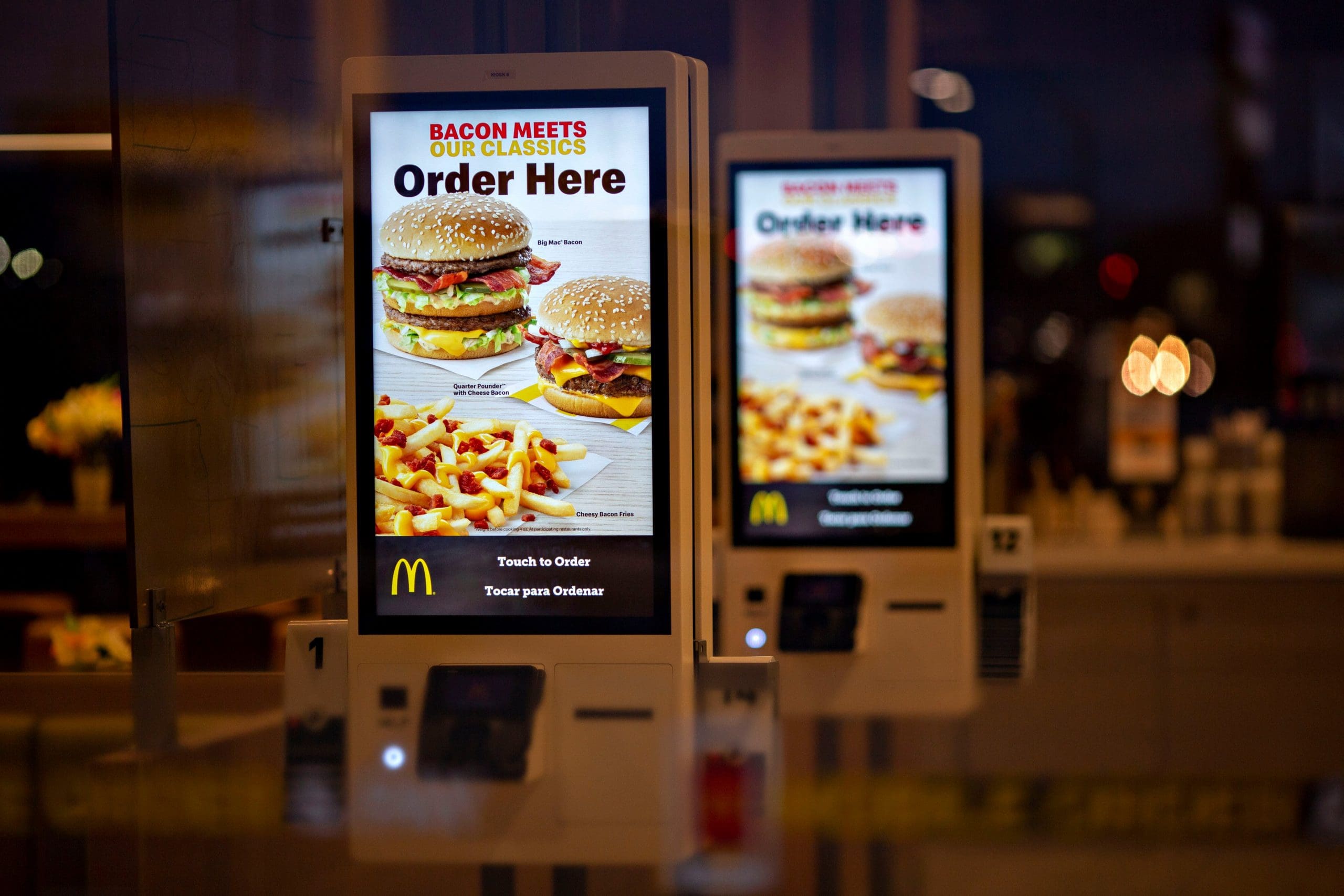
McDonald’s’ digital ordering transformation is often associated with its self-service kiosks, but the real success came from re-engineering the entire order process. This included:

  • Kitchen management systems and collection screens for speed and accuracy.
  • Mobile ordering and payment for convenience.
  • Third-party delivery integration to capture off-premise demand.
  • An omnichannel loyalty programme to drive repeat visits across every channel.
Why Self Service Kiosks are a Smart Investment for your Restaurant

The result:

  • Increased throughput without sacrificing quality.
  • Improved customer satisfaction through faster, more reliable service.
  • A consistent brand experience across all touchpoints.

The key takeaway for growth-stage QSRs

You don’t need the same budget as McDonald’s to achieve similar operational wins. By choosing the right partner and taking a 360-degree view of your technology stack, you can:

  • Centralise operations so your team works from one source of truth.
  • Streamline the order flow from the customer screen to the kitchen station.
  • Scale efficiently without adding operational complexity.
  • It’s not about adding “more tech”, it’s about building a connected system that fuels growth.

Take control of your growth

At Vita Mojo, our mission is to help ambitious QSR brands transform operational complexity into clarity, so you can focus on expanding your footprint, increasing revenue, and delighting guests at scale.

What makes the Vita Mojo system different?

  • One central menu for all channels and locations: update once, everywhere.
  • One system for all orders: every channel flows into a single operational view.
  • One source for all sales date: enabling fast, informed decision-making.

This unified approach means:

  • Faster rollout of new locations and brands.
  • Reduced training time for new staff.
  • Improved throughput during peak periods.
  • Consistent guest experience across every touchpoint.

As Paul Hopper, Founder of HOP Vietnamese, put it: “It needed to be all singing, all dancing, all channels under one roof. And our partner of choice was Vita Mojo.”

If you’re ready to scale faster and operate with confidence, book a consultation with our team. We’ll map your current setup, identify opportunities for efficiency, and design a solution that supports your growth ambitions.

Book a demo