
9 October 2026
Creative foodies, behaving like a tech team: inside The Salad Project’s innovation story
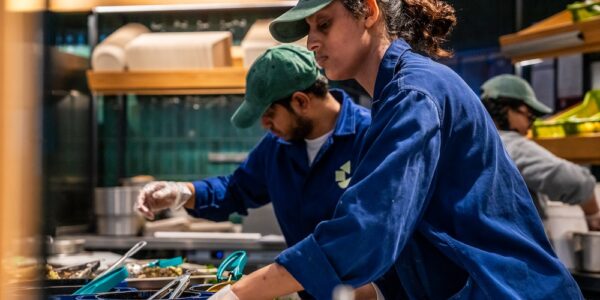
Clem Haxby of The Salad Project shares how a team with no tech background built a loyalty-led digital growth engine.
We surveyed restaurant operators to understand the challenges they face, and their plans to help streamline operations and fuel growth.
Read or download the full research report below, or skip ahead to the summary.


The hospitality industry is full of energy and possibility, yet many operators feel stuck in survival mode. Rising costs, staff shortages and the demands of omnichannel ordering turn daily operations into a constant balancing act. With so much time spent keeping things moving, finding space to focus on growth can feel impossible.
A new report, Hospitality Tech 2024: Bridging the Efficiency and Profitability Gap, from Vita Mojo and hospitality research agency KAM, explores this pressure in detail.
The research surveyed 81 UK hospitality experts across a range of estate sizes, from six to 250 sites, all of whom were responsible for selecting or purchasing technology. The findings reveal a clear truth: fragmented technology is now one of the biggest barriers to growth.
The report identifies four main challenges that hold businesses back: a disconnect between efficiency and growth, growing frustration with technology complexity, decisions not shaped by data, and a lack of effective technical support.
Increasing profitability (64%) and growing customer numbers (54%) are top priorities for operators. Yet only 28% list improving efficiency as a main focus. This disconnect sits at the heart of the efficiency paradox. Operators want to grow, but many are building that growth on systems that drain time and limit output.
More than half of operators (56%) say a lack of time is a major barrier to achieving business goals. Much of this time loss comes from siloed technology. Simple changes, such as updating a new item across all menus, become hours of manual work in multiple systems.
Omnichannel ordering can also cause kitchen confusion when each channel uses a separate device. Without the right tools to streamline operations, teams stay busy managing existing demand rather than unlocking new growth.
For many businesses, technology now feels like an obstacle instead of a solution. One of the biggest frustrations is the traditional Point of Sale (POS) system at the centre of a growing list of bolt-on tools. Over time, this creates a complex web of integrations that are slow, fragile and prone to downtime.
Complexity and skills gap: 44% of operators do not feel they have the in-house skills to make the most of their systems, and 31% say too much training is required.
POS frustration: More than half (57%) are frustrated with their current POS. This rises to 67% for larger operators with 101 to 250 sites.
Time-consuming updates: 23% say updating menus takes far too long. A Digital Brand Manager at Crêpeaffaire shared that the team “used to work through the night” to complete simple menu updates.
Understandably, many operators are cautious about changing technology, yet one in five fears that new systems will not improve anything. This results in more time and money being spent on maintaining outdated setups instead of addressing the root problem.
Growth demands precise, accessible data. Operators need accurate information for inventory, marketing and menu decisions that drive revenue. Most respondents (79%) say having all data in one place is the most important feature of a POS system.
The reality is very different. Two in three operators (66%) feel they are not using their data effectively. Nearly 40% struggle to use data for day-to-day decisions because it is scattered across disconnected platforms. Without a single, real-time view, it becomes difficult to react quickly and confidently.
Support also remains a major pain point. Only one in four operators is very satisfied with the support they receive. More than half (56%) are frustrated with their POS support, rising to 87% for the largest businesses. In a fragmented setup, operators are often passed between providers, with no one taking ownership when issues arise.
The report makes a clear recommendation: the sector must move away from fragmented, POS-centric setups. The alternative is a single, integrated Restaurant Order Management System (OMS) that manages every order, channel and menu from one central source.
An integrated system can remove the manual work that harms efficiency and free teams to focus on higher-value decisions. It can also help operators build a more consistent, data-driven operation.
Define needs
Be clear on what the business needs most, whether that is smoother peak throughput or removing the kitchen chaos caused by third-party delivery.
Overcome sunk costs
Do not stick with an expensive, failing system simply because you have already invested in it. If the current setup slows the business, it is time to change direction.
Aim for simplicity
A single order management system saves significant time. For example, Deep Blue, the UK’s largest fish and chip chain, saved five hundred hours on menu updates and achieved a 30% rise in Average Transaction Value (ATV) after consolidating its stack with the Vita Mojo Order Management System.
Choose a partner, not just a supplier
Look for a partner that integrates with existing back-of-house systems and supports the business with real expertise. Technology should save time and reduce friction, not add more of it.
By replacing fragmented tools with a unified system, operators can turn daily chaos into confidence. With a reliable foundation in place, they can redirect their energy to growth, innovation and long-term success.
























Clem Haxby of The Salad Project shares how a team with no tech background built a loyalty-led digital growth engine.
Chris George, VP of Product, walks through six months of delivered features and gives a first look at the second half of 2026.

How does a fast-growing QSR brand scale through franchising without losing control? Five lessons from YouMeSushi’s Tim Circus, Head of Franchise.
Want to see more from Vita Mojo?