Unique customer experience
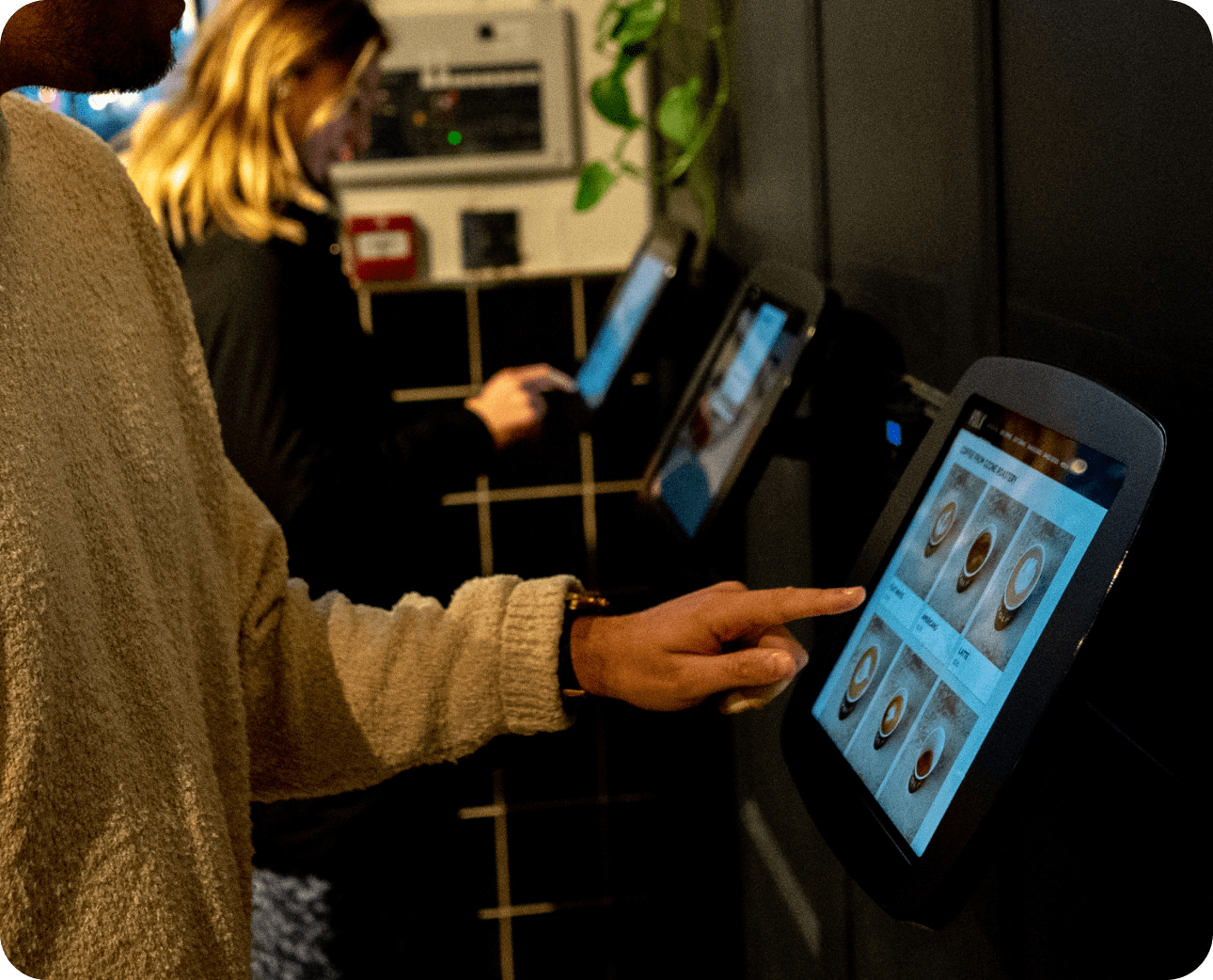
You don’t want your customer to have the exact same experience at your site as they have at any other restaurant or coffee shop.
Your business is unique, and your customer journey should be unique too.
Full customisation should be a central benefit of the tech you adopt, so you can deliver the experience your customers expect, however they interact with your business. So bear in mind that with the guarantee of a record-quick setup usually comes limited branding and restricted steps of service.
You want your digital ordering channels to be bold, beautiful, and fully branded to help set your customer experience apart. This is a crucial element of encouraging digital adoption, increasing revenue through higher spend, and maximising customer loyalty.
It’s worth it to spend a little more time getting this right, rather than compromising and launching ordering channels that look the same as everyone else’s.
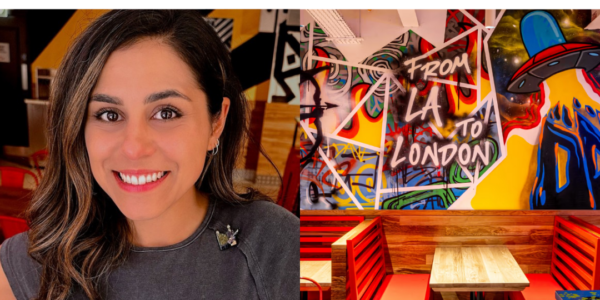
“Digital ordering has transformed our business. Since we installed kiosks and introduced Click & Collect, the average order size is up 23%. That equates to another £323,000 per year when we’re at full capacity.”
Bridie Fox
Operations Director, I am Doner
2. Significant change vs. point solutions
Another reason that certain providers can get you up and running with their solution so quickly is that they only focus on solving a specific problem or need within your operation.
Opting for this quick-fix approach often results in operations being dependent on a web of individual point solutions all from different providers.
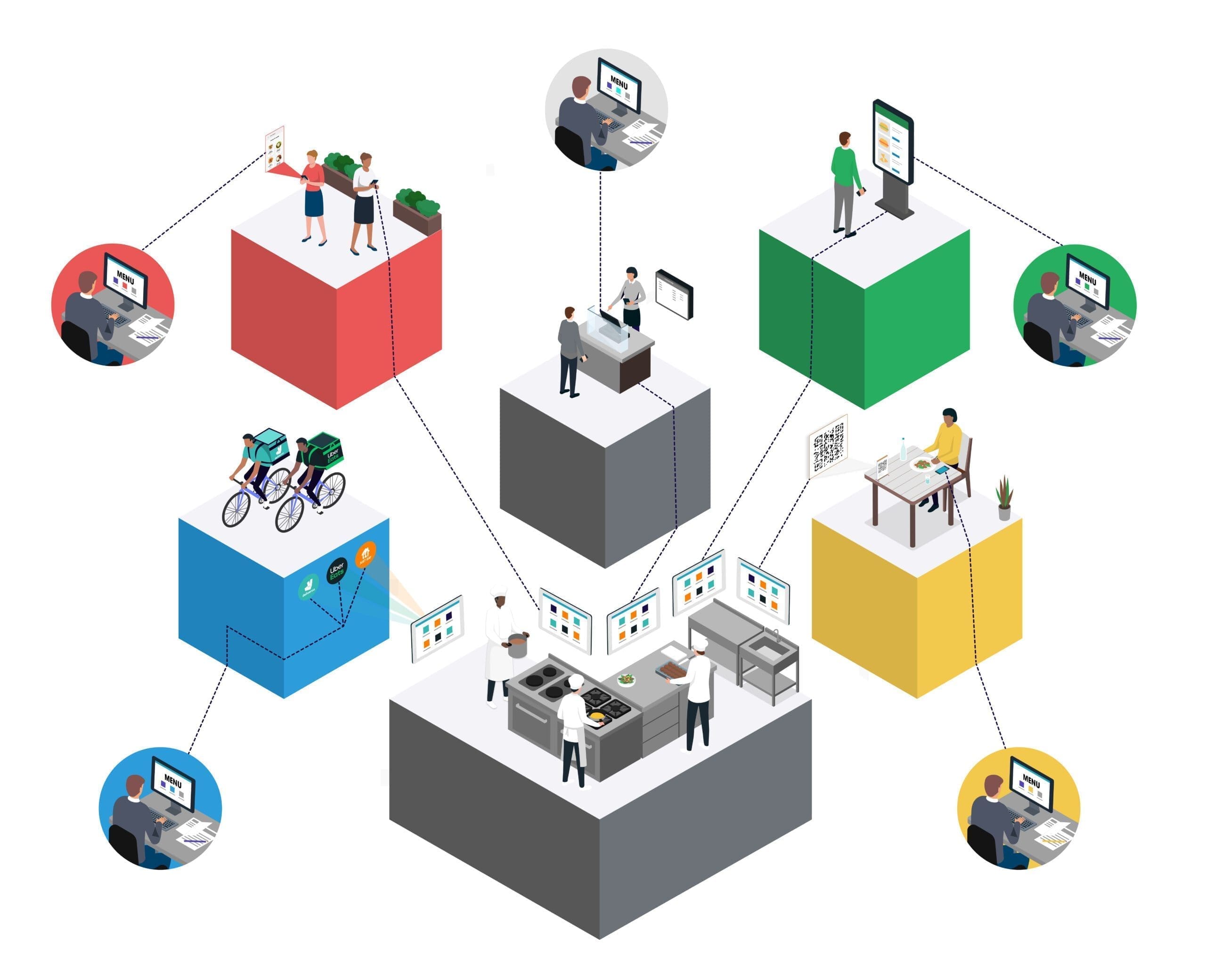
A fragmented tech stack of point solutions
The point solution problem:
This fragmented tech stack is quickly becoming outdated and is actually holding businesses back from growth.
Menu management, for example, becomes an unimaginable time sink when you have separate menu platforms across multiple digital order channels (and third-party delivery providers). Even updating the price of a single product can take hours.
And in the kitchen, back of house teams wrestle with more iPads than you’ll find in an Apple store as they try to keep up with orders coming through multiple streams onto multiple screens.
This kind of inefficient workflow is unmanageable, and most crucially, unscalable.
Adding another order channel or location will contribute exponentially to the complexity of your operation. And your kitchens won’t be able to accurately and efficiently fulfil the orders they’re already getting, let alone if you manage to increase those orders.
A different way of building hospitality tech
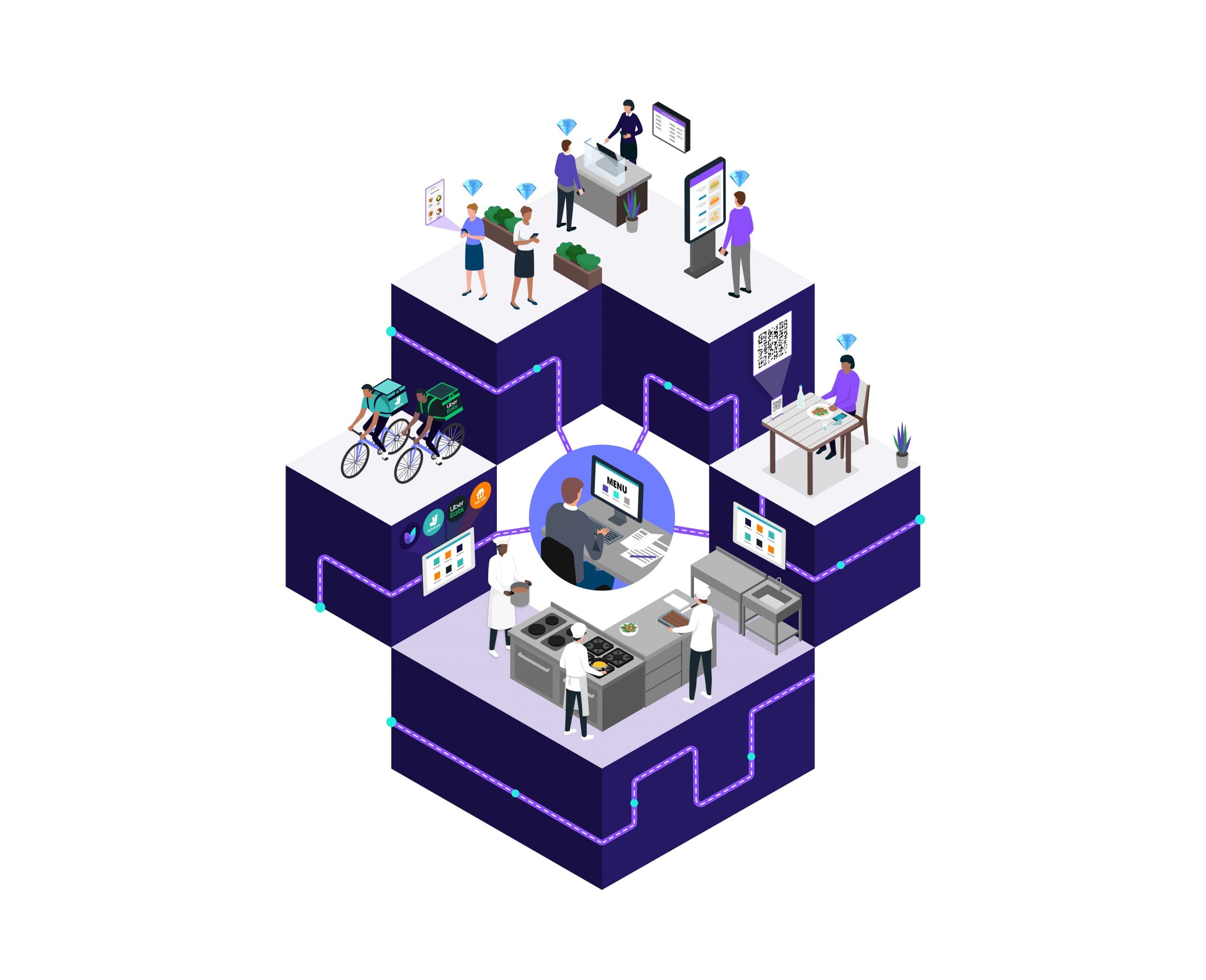
A single order management system
The point solution path might be faster, but as we’ve seen it won’t result in long-term efficiency and growth for your business.
Instead, rethinking your tech from the ground up by moving to a single order management system can be what sets your business up for long-term success.
This new way of building a tech stack combines every aspect of order management – including POS, digital ordering channels, kitchen management system, Loyalty and reporting – into a single platform.
Moving away from the POS-centric tech model, and instead dedicating the time and resources to a more significant change can feel like a scary concept, but the long-term results for brands who have done the same speak for themselves.
“We had a fragmented tech stack where everything was disjointed and separate. We had different providers for our EPOS and digital ordering, and all our delivery partners on top of this it was impossible to manage and update our channels quickly. We didn’t think there was a solution for this but Vita Mojo’s Order Management System has helped us simplify our processes massively.”
3. Upfront vs long-term cost and value
Upfront cost will be one of the driving forces of getting buy-in across the business when you’re deciding on new tech. But it’s equally important to consider the long-term value of each approach, and the hidden costs that can hamper growth.
Upfront cost vs long-term cost
Cost is an extremely important factor that will undoubtedly impact your decision about new tech. It’s essential to consider upfront cost vs. long-term cost and the return on investment from both approaches.
A POS-centric tech stack may have the initial advantage of being a cheaper investment, but this initial advantage often masks hidden costs such as expensive bolt ons and card surcharges that significantly diminish the long-term value.
Upfront value
Making a bigger investment upfront – but without hidden charges or friction points throughout the tech lifetime – will deliver a more efficient route to true restaurant growth that will last long term.
A streamlined, order-centric approach to tech also delivers a different kind of value as soon as it’s installed, from day one.
Your operation will benefit from an immediate reduction of failure points, a boost in efficiency with centralised menu management, and a significant improvement to your data strategy with streamlined sales reporting, all quick off the start line. Scalability, business growth, and omnichannel guest experience all depend on these day-one value points, which only a centralised system can deliver.